How to Choose Your First AI Project: A Practical Guide for Small Businesses
A step-by-step way to choose a useful AI pilot, measure the real cost, and decide whether it deserves a wider rollout.
Updated Read article
Practical guides for putting AI to work. Make better decisions about assistants, websites, workflows, and the people who use them.
Find your next useful idea68 articles
A step-by-step way to choose a useful AI pilot, measure the real cost, and decide whether it deserves a wider rollout.
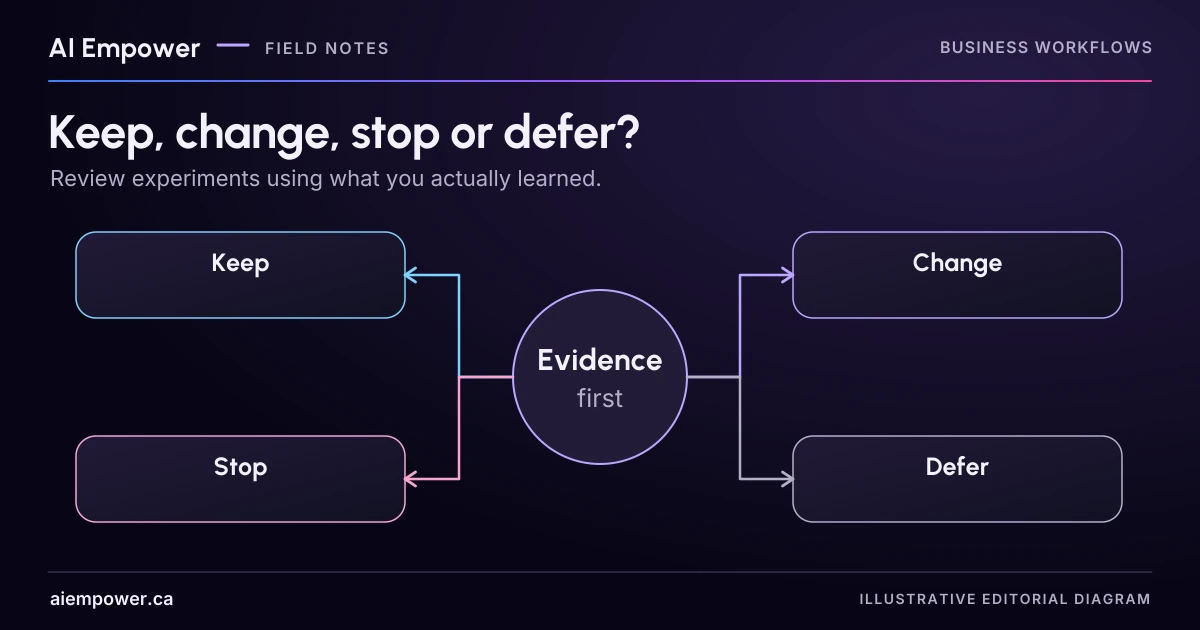
Review completed AI experiments with evidence for keep, change, stop or defer decisions. Separate missing records from demonstrated failure.
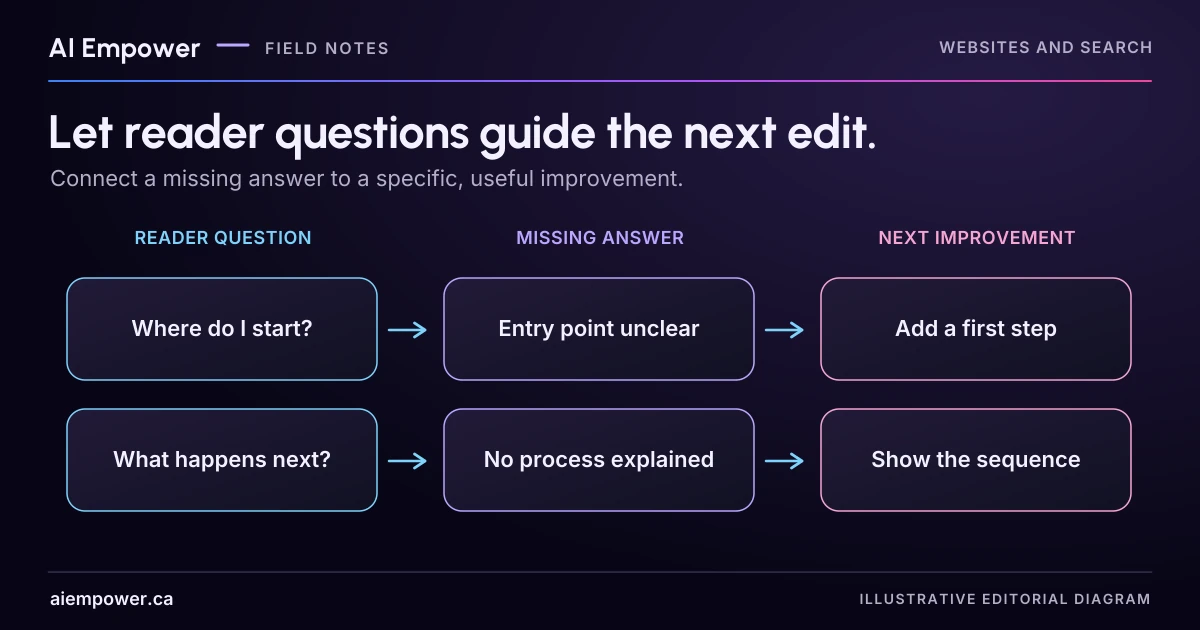
Choose the next blog improvement from reader questions and verified gaps. Build a small queue with reader benefit, evidence needs and owners.
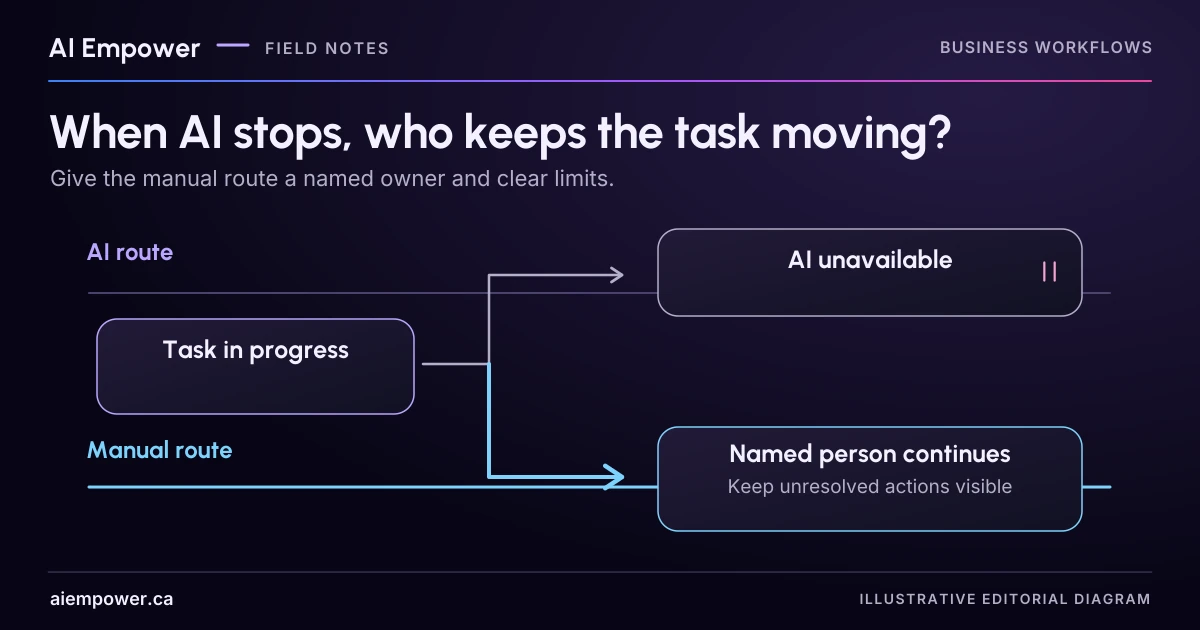
Rehearse how staff continue a bounded task when an AI assistant is unavailable. Preserve work-in-progress ownership and verify restart conditions.
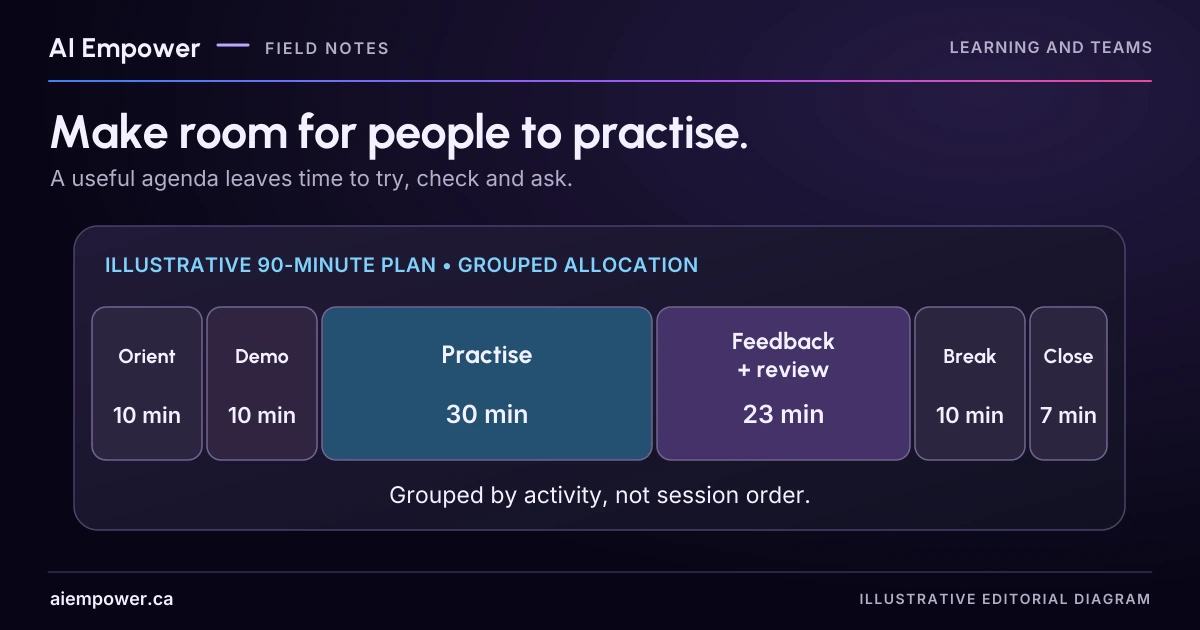
Plan an adult AI workshop around one observable task. Allocate practice, feedback, breaks and access time before adding more demonstrations.
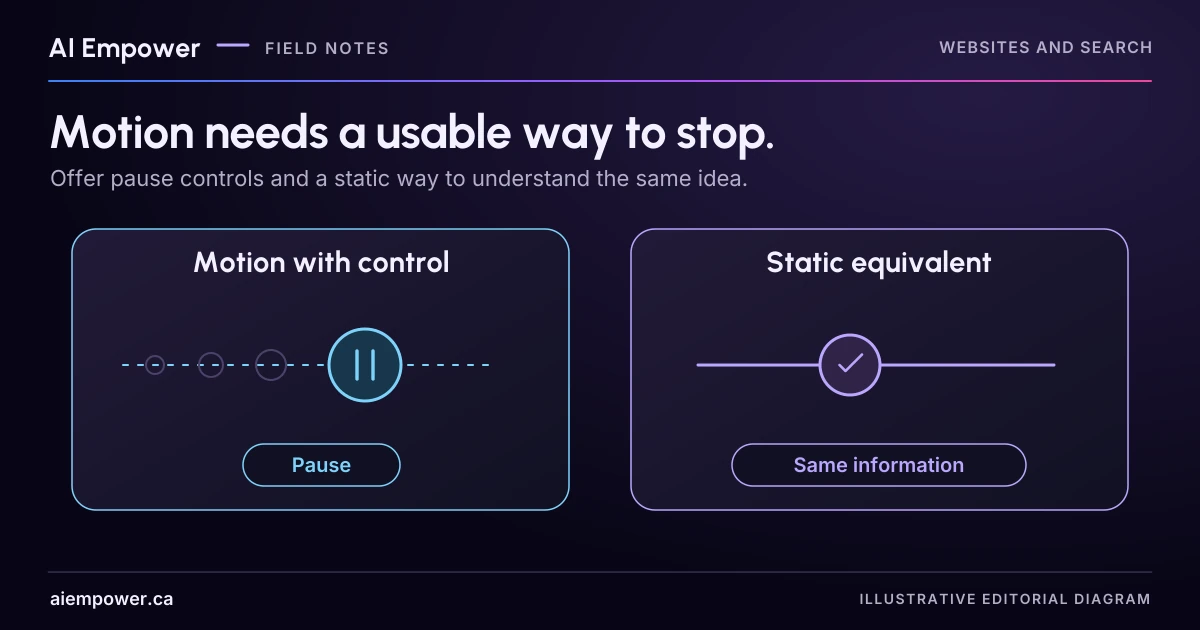
Rehearse pause controls and reduced-motion behaviour for a website interaction. Preserve the task and state when movement is removed.
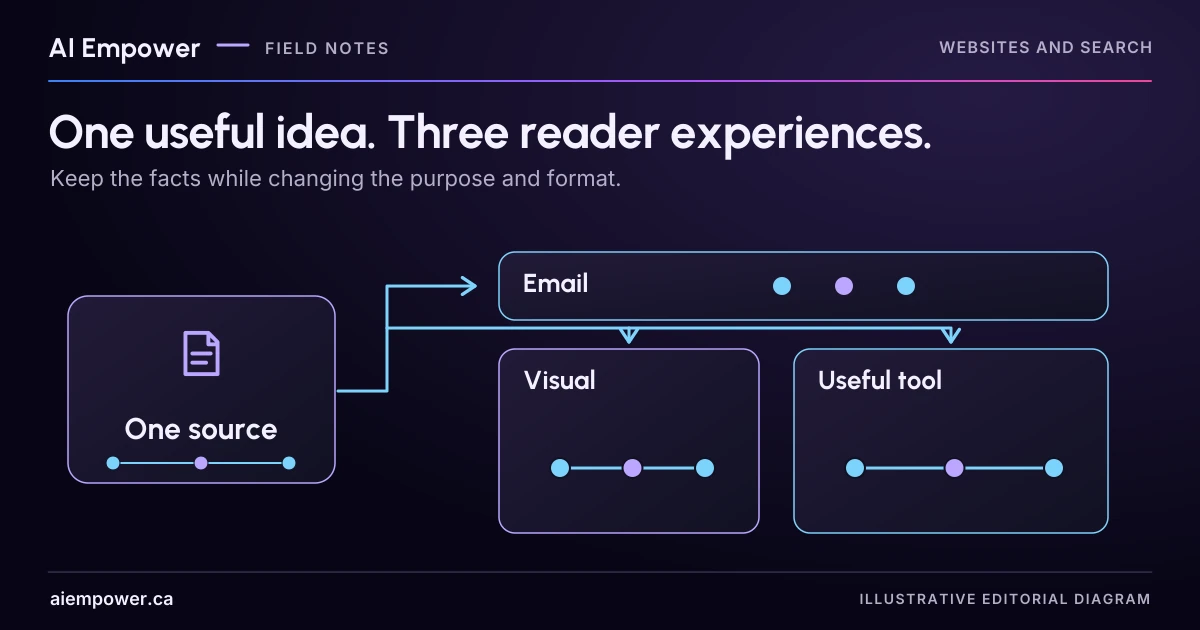
Turn one supported idea into an email, visual and on-site exercise. Keep facts consistent while giving each format a different reader task.
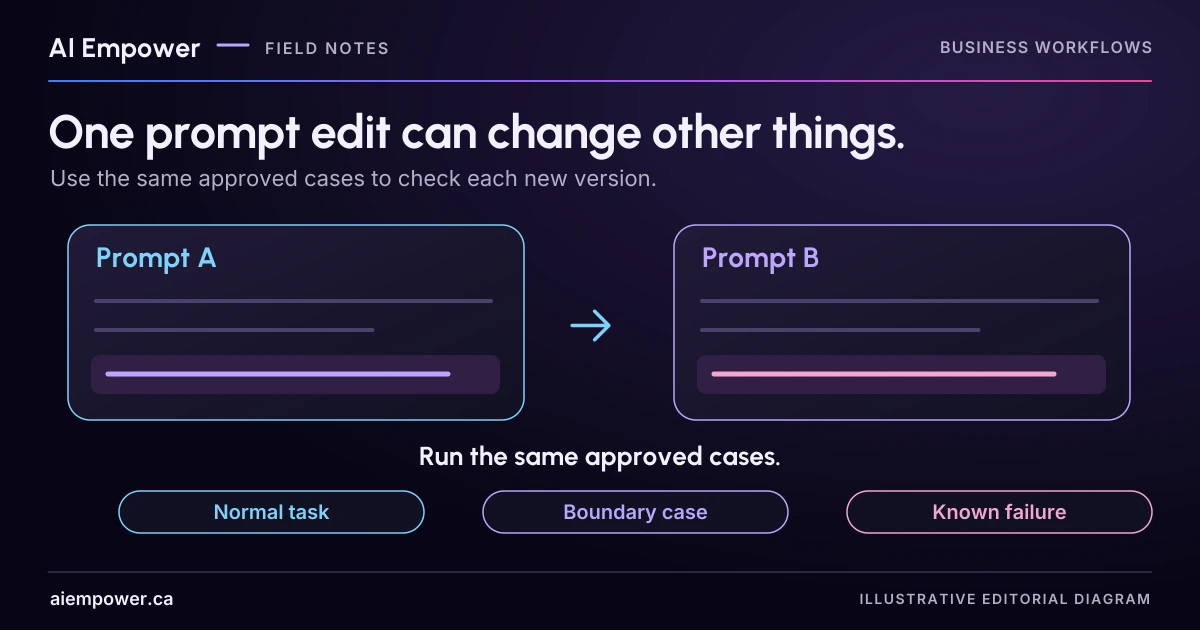
Compare prompt versions against fixed fictional cases. Record the intended fix, new failures and evidence needed before replacing instructions.
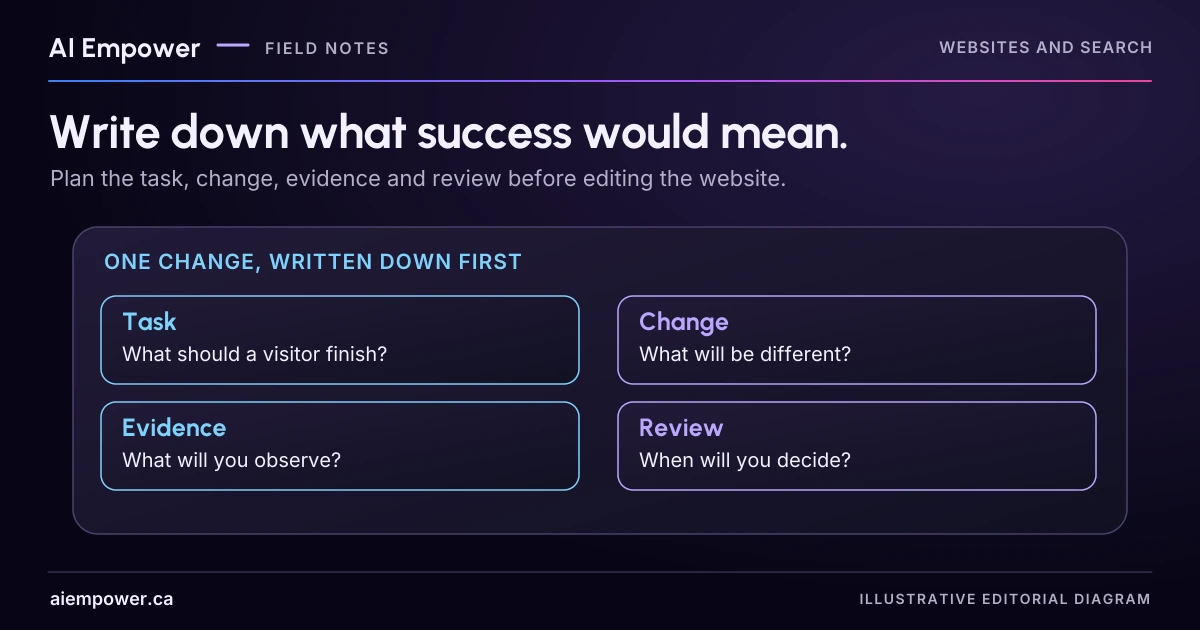
Write a one-page website experiment brief with a visitor task, completion event, review window and stop conditions before making the change.
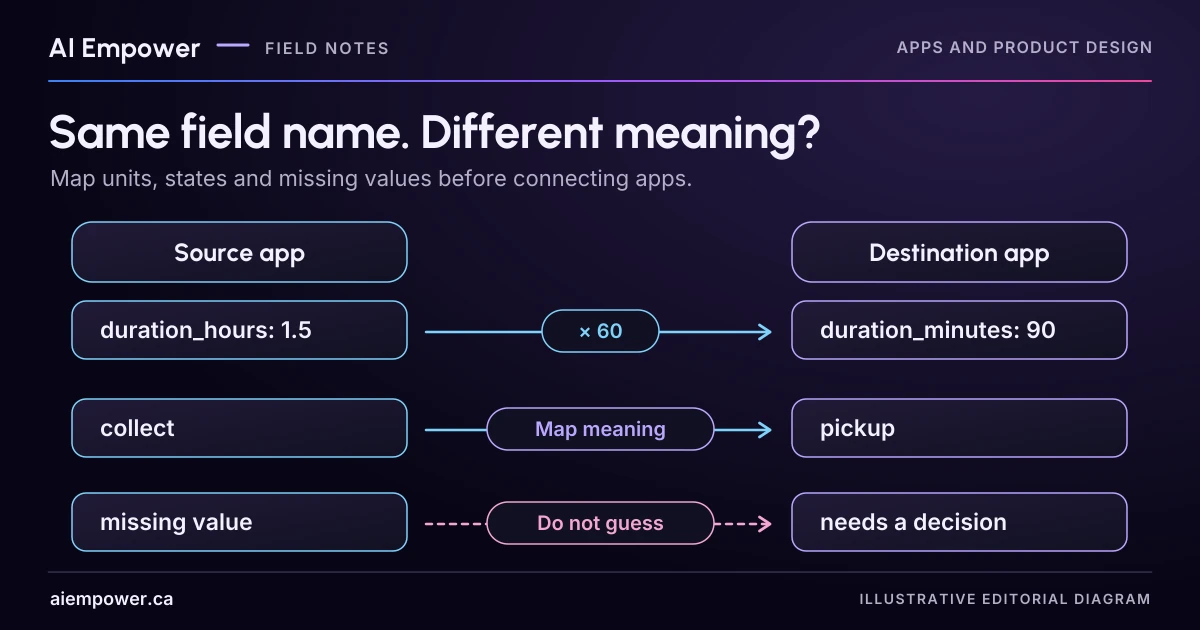
Define what source and destination fields mean before connecting apps. Test units, allowed values and missing data with fictional rows.
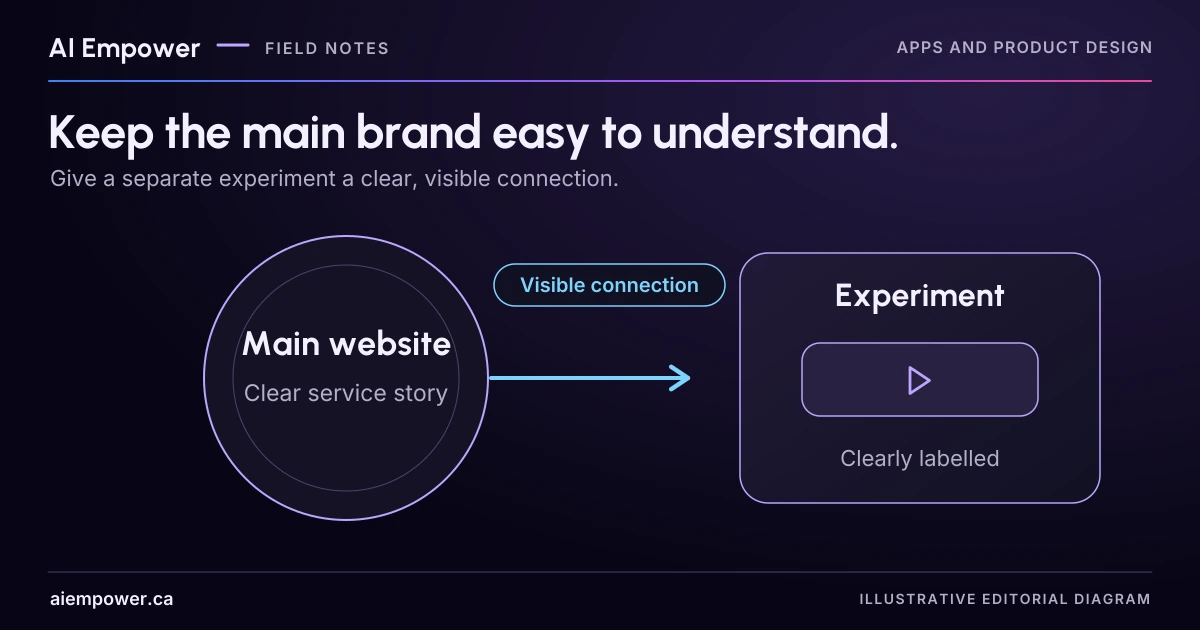
Decide whether an interactive experiment belongs on the main website, a clearly linked separate site or a deferred list, with ownership visible.
Prepare for an AI supplier change with an exit-pack manifest, one checked export and a manual fallback. Record what is portable and what remains unclear.
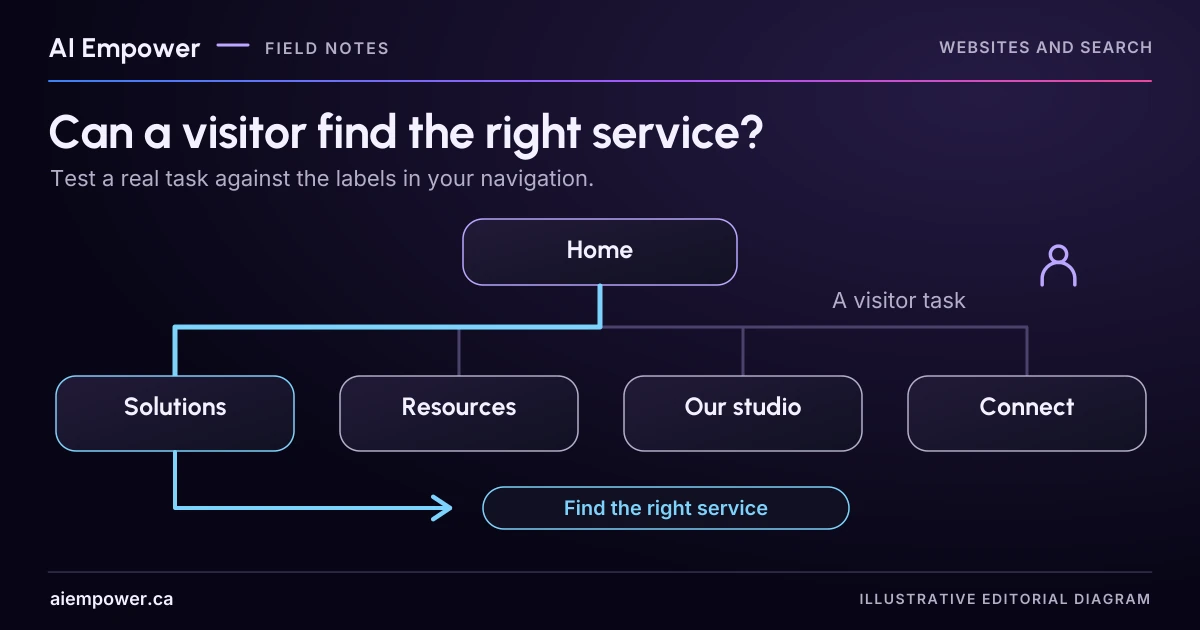
Use a text-only navigation test to find confusing service labels. Record actual paths and questions without inventing a site-wide success score.
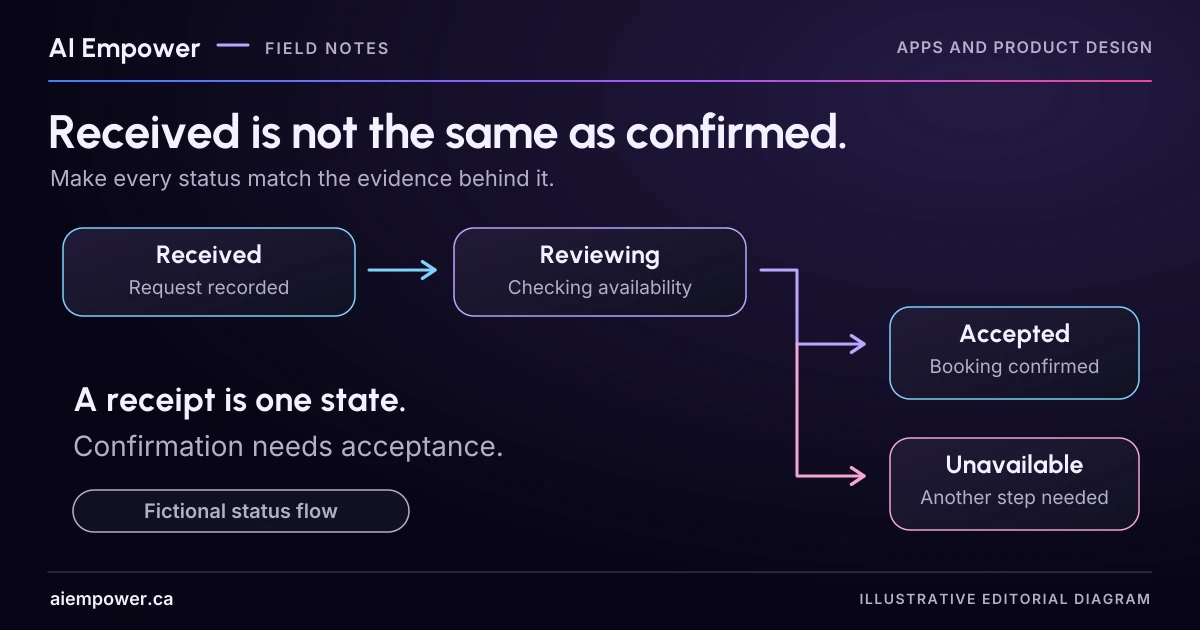
Design messages that distinguish a submitted request from an accepted appointment. Map each state to evidence and a clear customer next step.
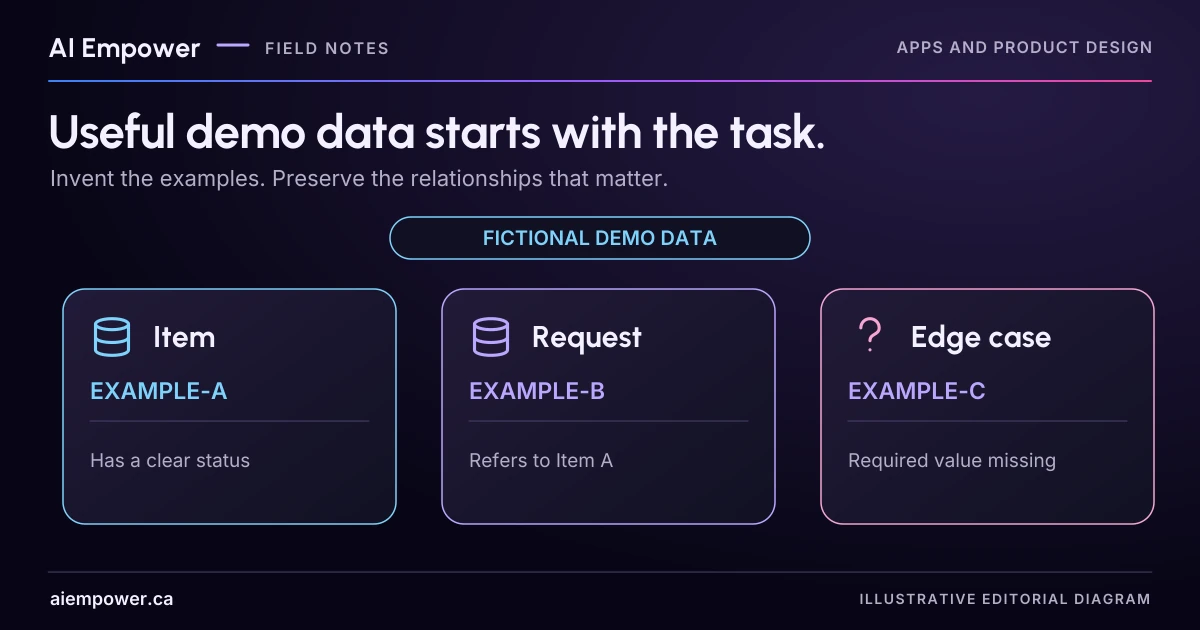
Create a small fictional dataset that preserves task relationships and edge cases. Keep real customer records out of the demo recipe.
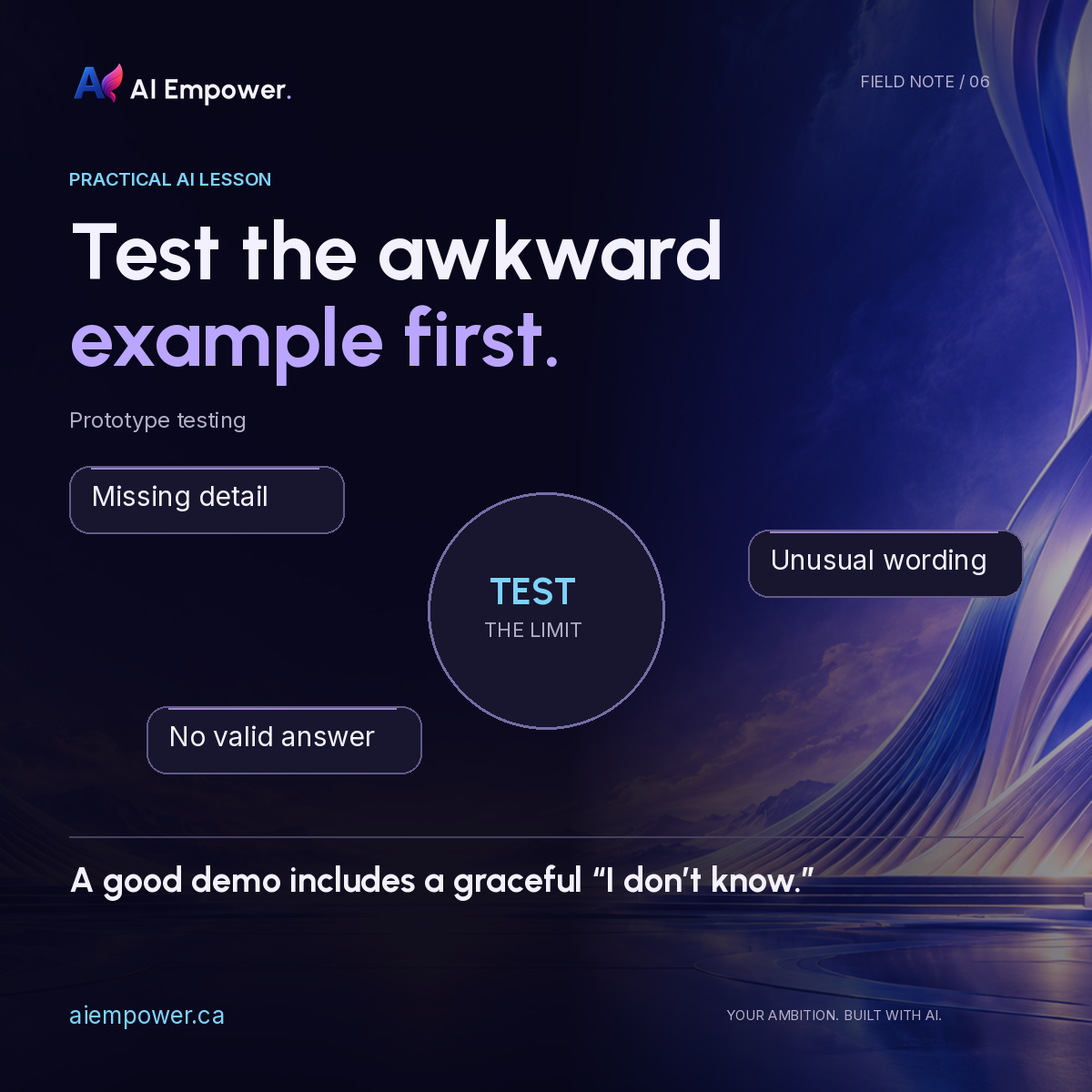
Test an AI enquiry-summary assistant with six fictional failure drills, covering stale sources, missing facts, false promises and failed handoffs.
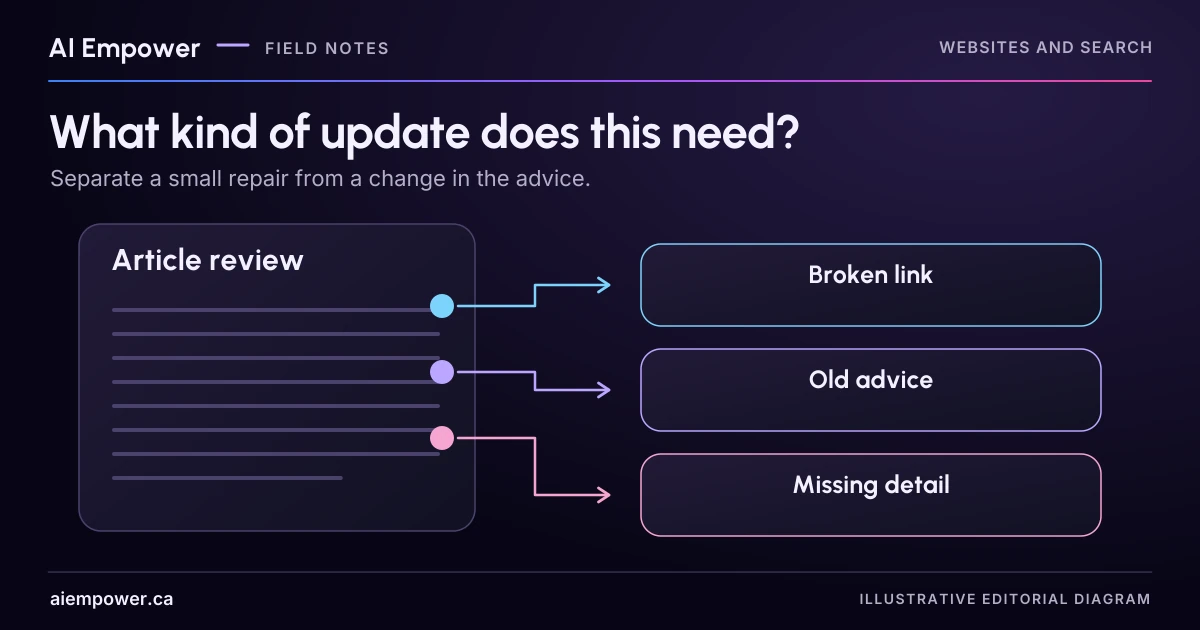
Decide whether a blog issue needs a link repair, clarification or material revision. Keep a scoped change record and an honest update date.
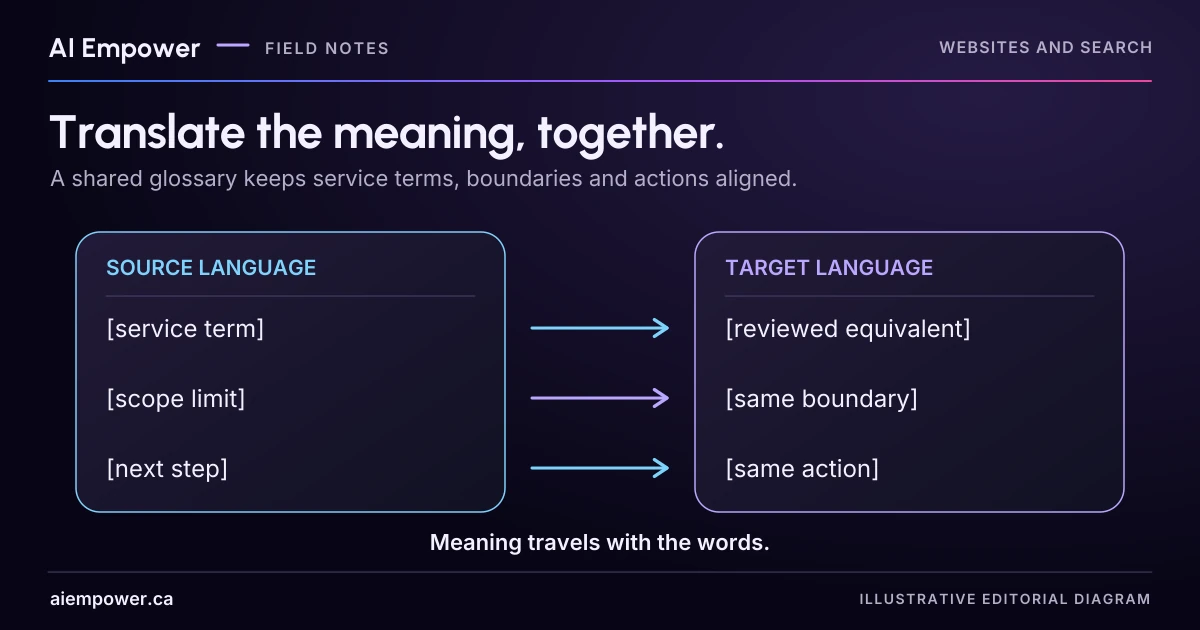
Prepare a service-page glossary before translation. Record approved meanings, unresolved terms and who will review the target-language page.
Plan an adult AI workshop without personal AI accounts. Use a facilitator demonstration, a fictional exercise pack and a prepared offline route.
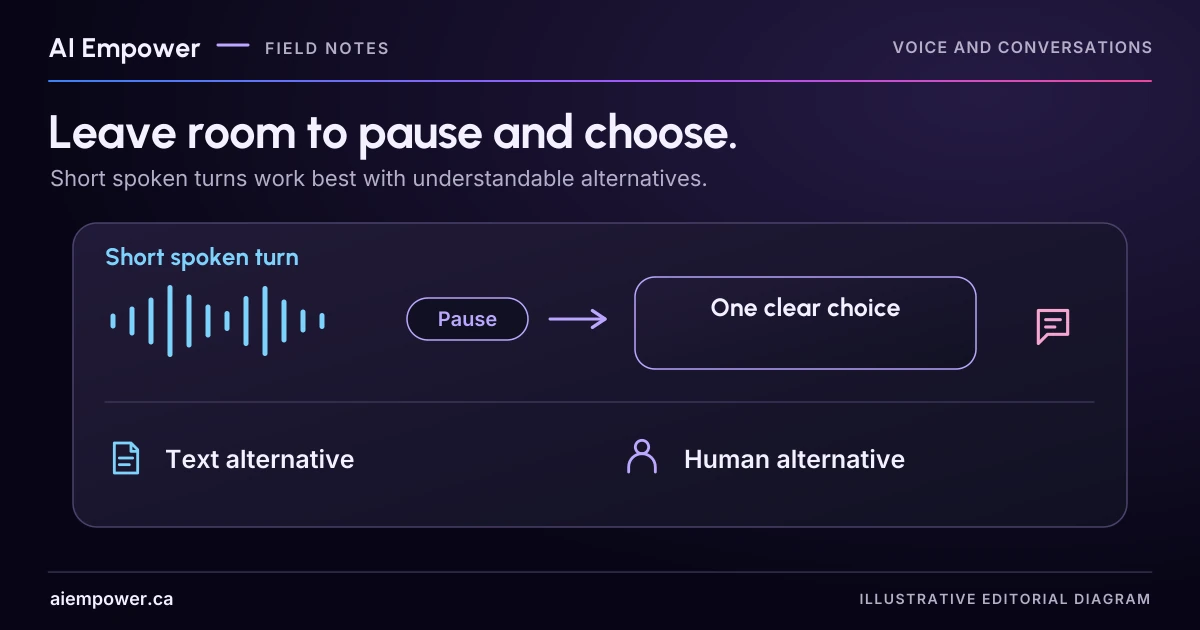
Rehearse a short voice script with pause, repeat and channel-change choices. Separate written script quality from actual audio performance.
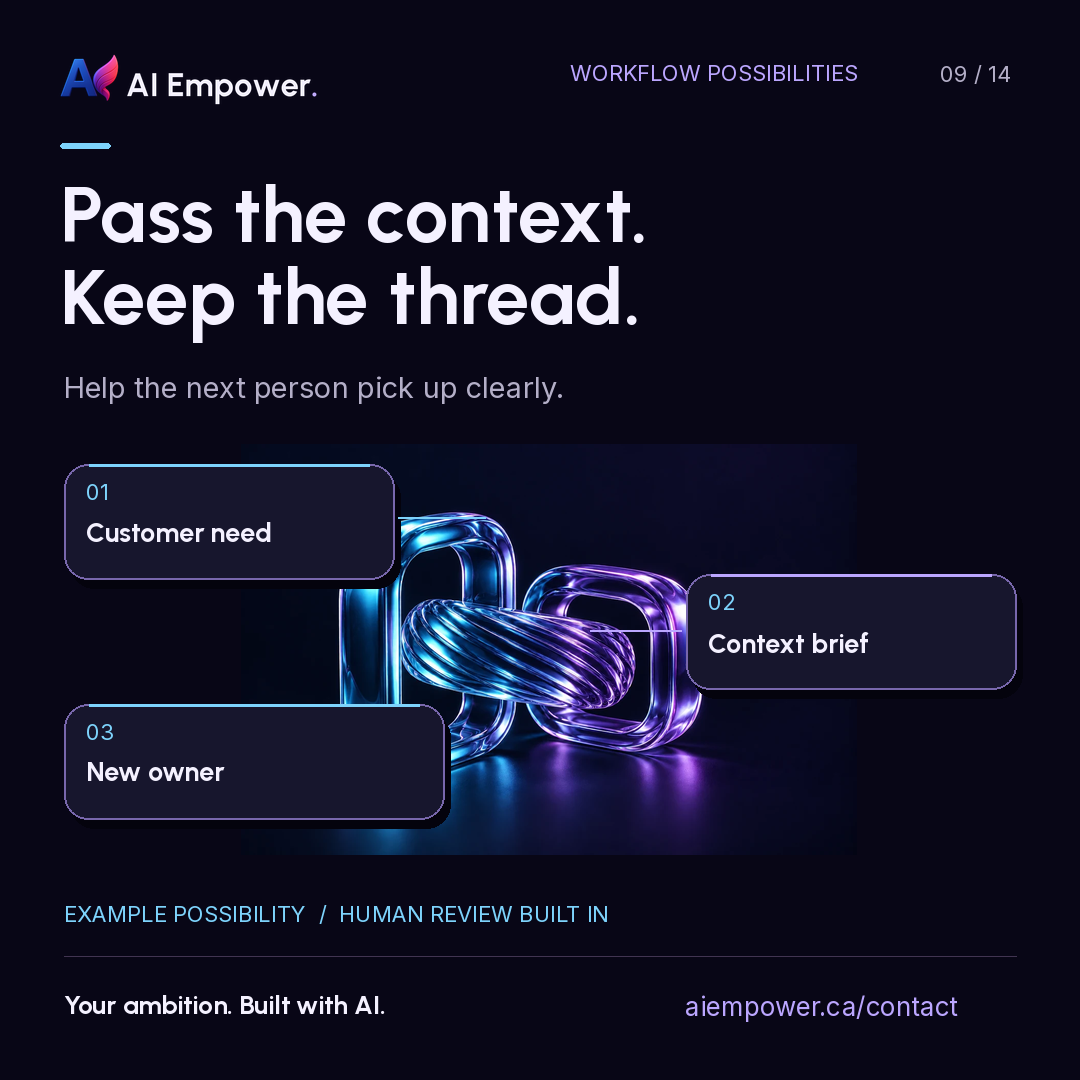
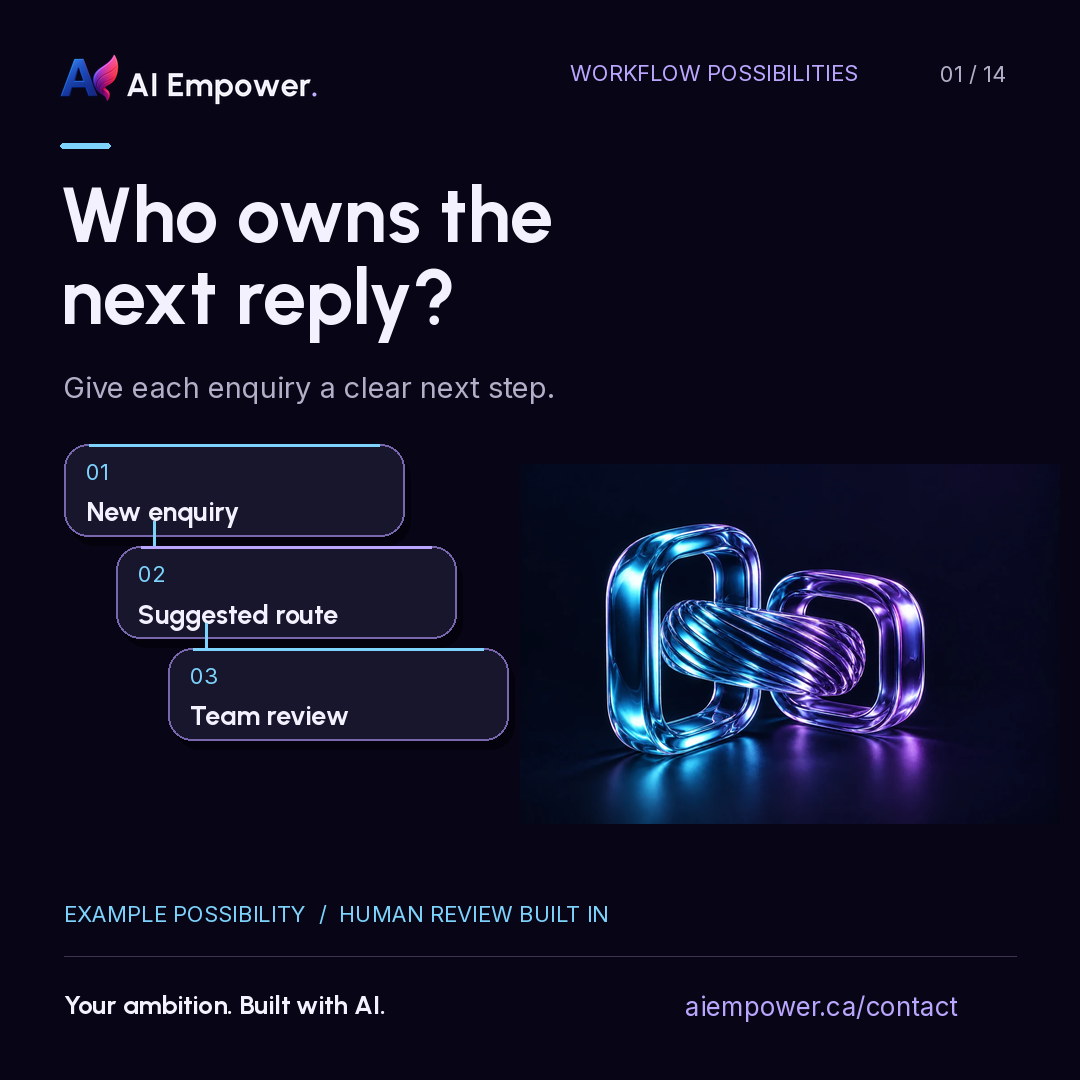
Clarify enquiry ownership with a handoff receipt covering scope, open questions, acceptance and what to do when the receiving colleague stays silent.
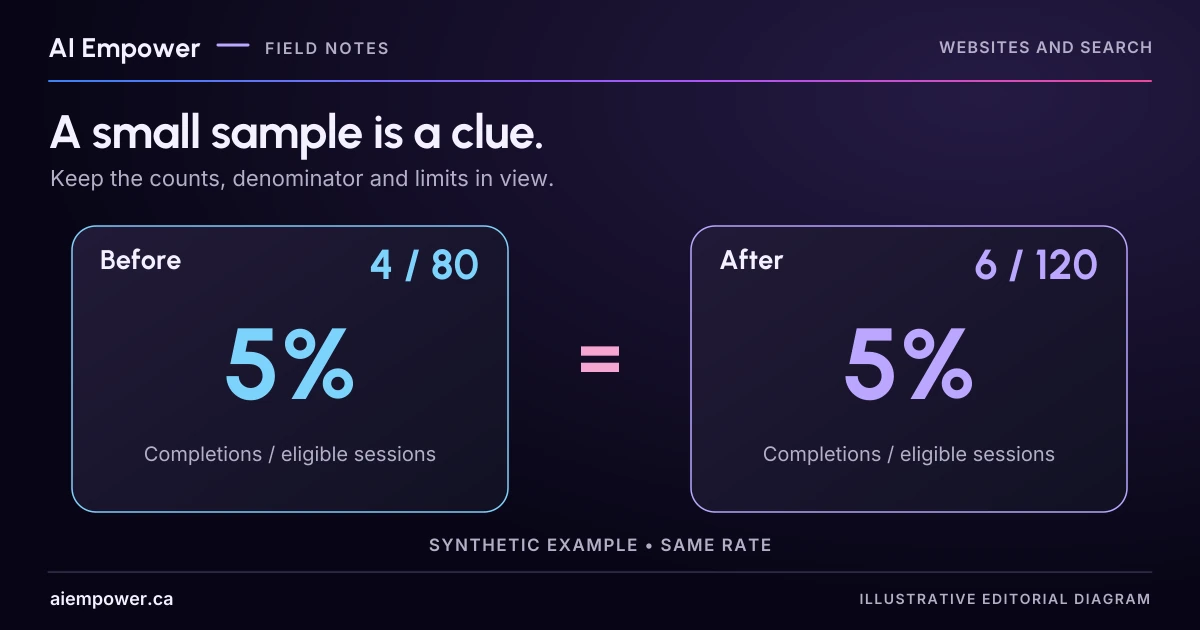
Compare website enquiry counts and rates without overstating a small sample. Keep denominators, missing data and other changes visible.
Check what an AI spending alert or usage limit actually does. Rehearse warnings, stopped work, parallel requests and fallback with a practical limit card.
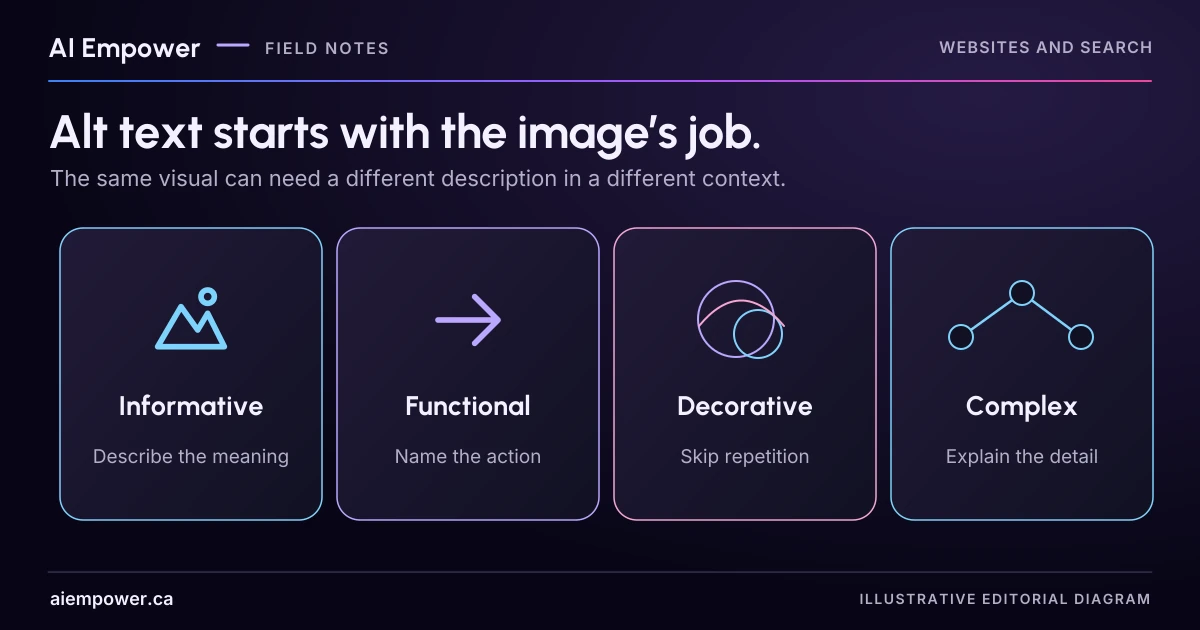
Choose useful text alternatives for informative, functional, decorative and complex images through four fictional business-page exercises.
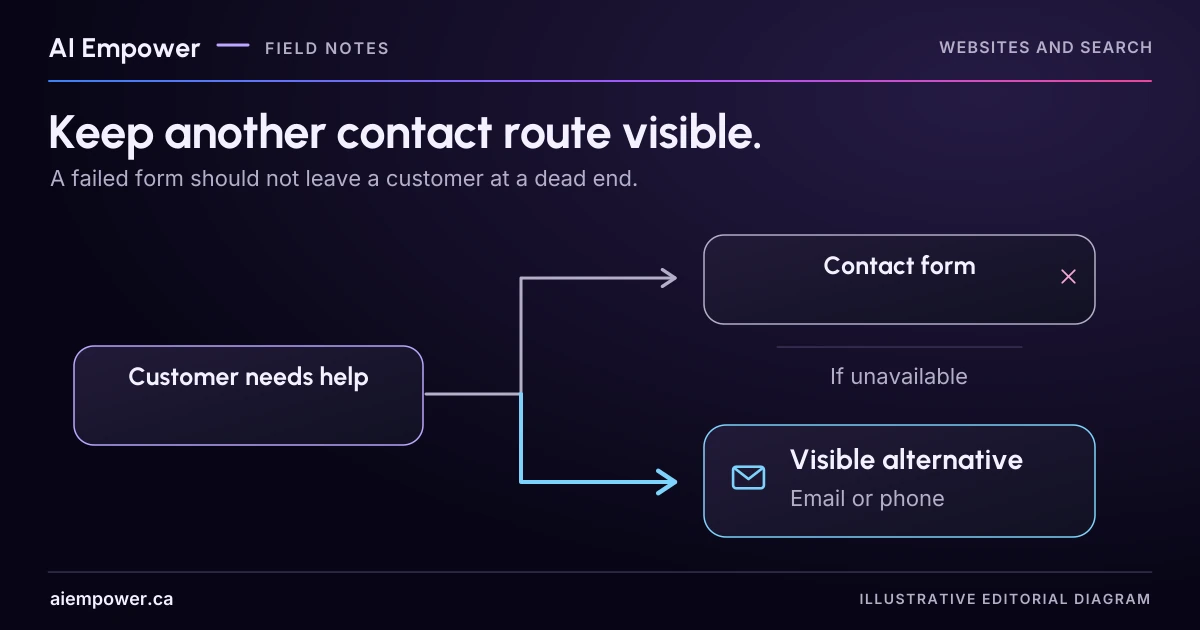
Map a working alternative when your contact form fails. Rehearse honest error messages, route ownership and unknown submission status.
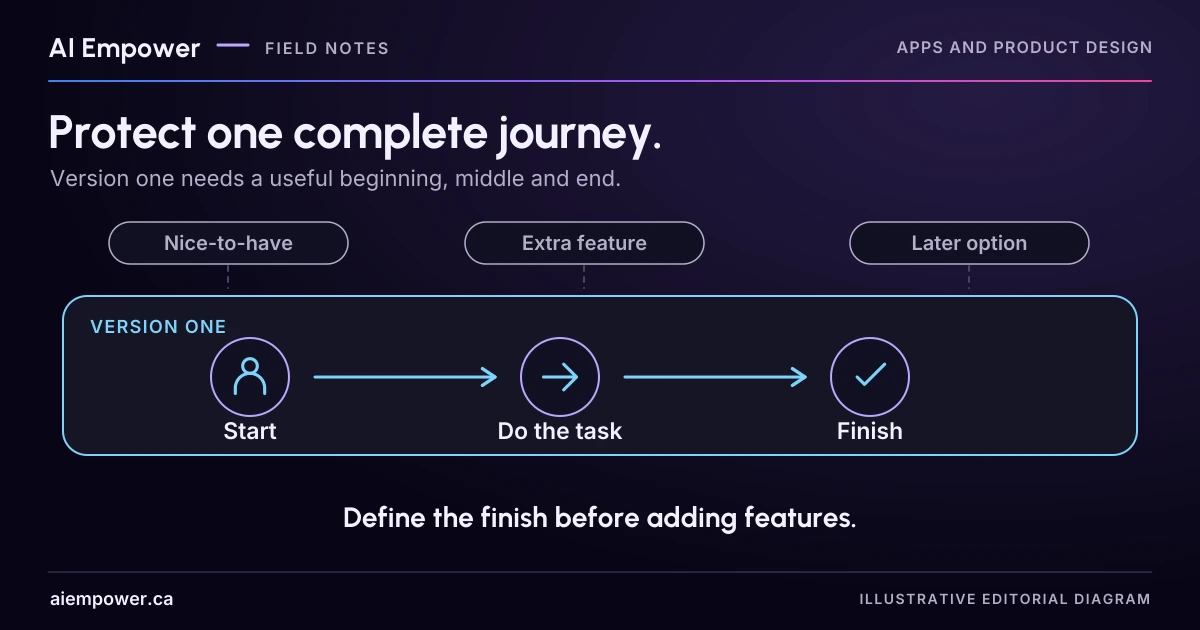
Cut an app feature list into one complete, testable journey. Keep necessary recovery and ownership while parking extras for a later release.
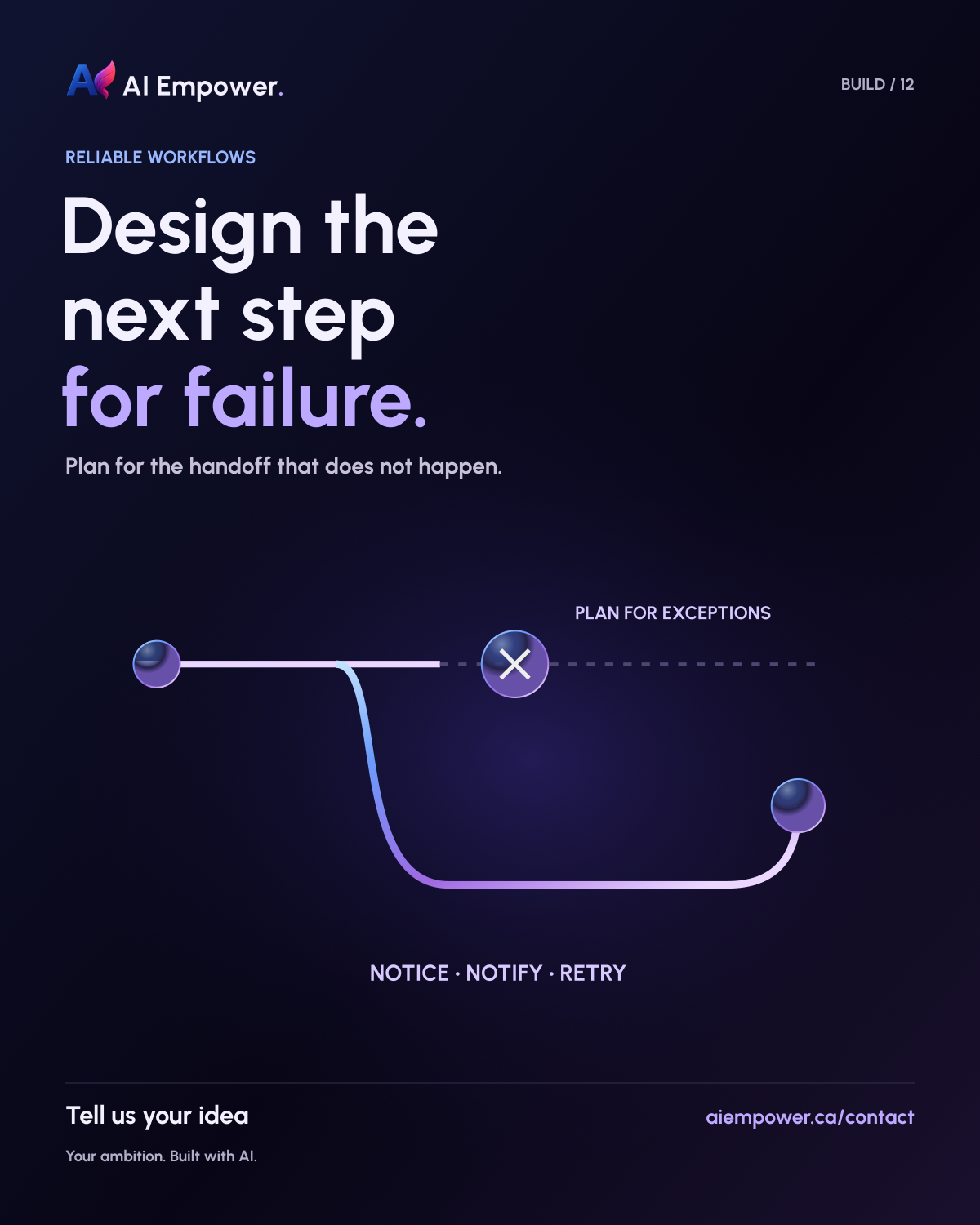
Handle an enquiry acknowledgement timeout with one owner, clear send states and a reconciliation record before deciding whether to resend.
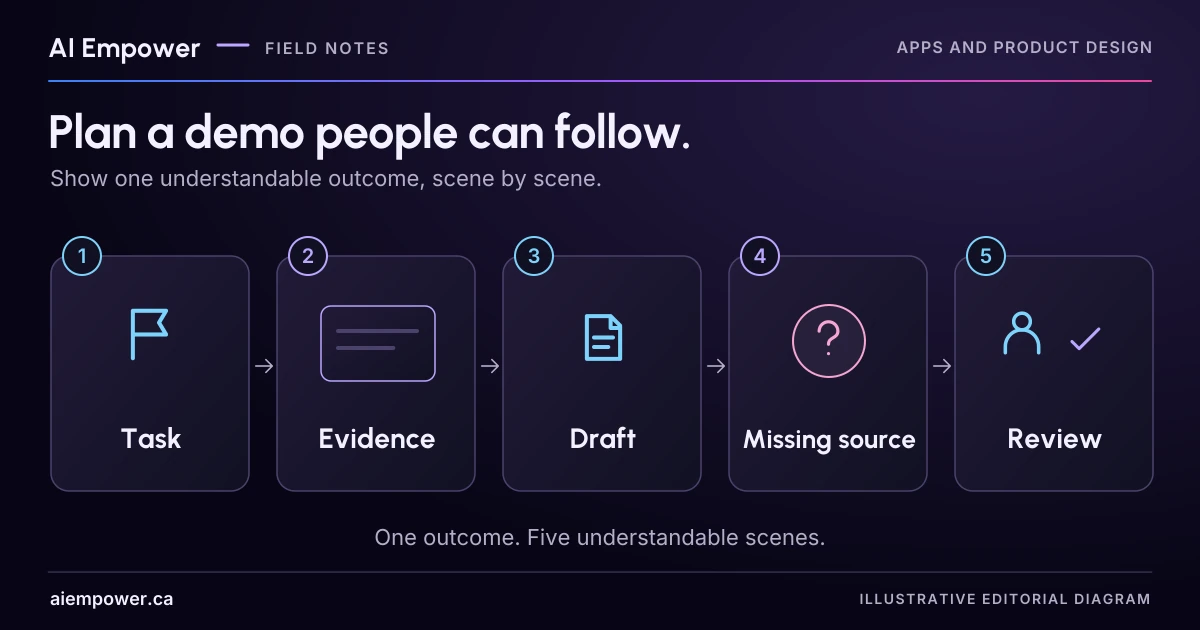
Plan a five-scene business demo with a clear user task, visible evidence, an honest failure state and precise labels for simulated features.
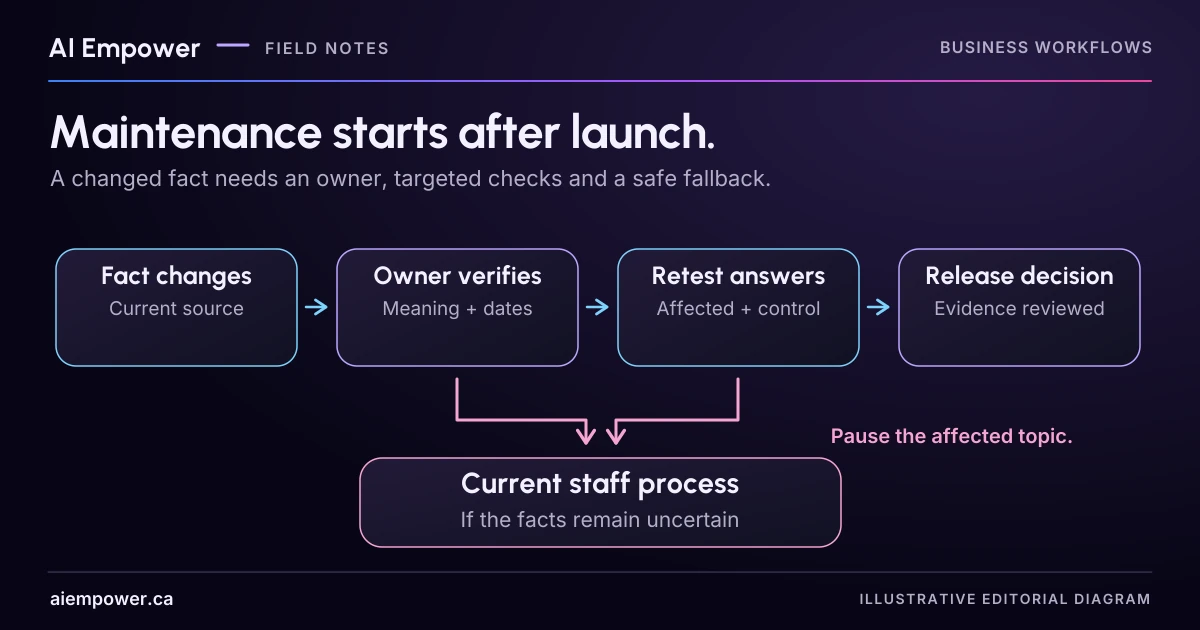
Keep a staff-reviewed AI FAQ current with source owners, a fictional change record, targeted answer tests and a fallback when facts are uncertain.
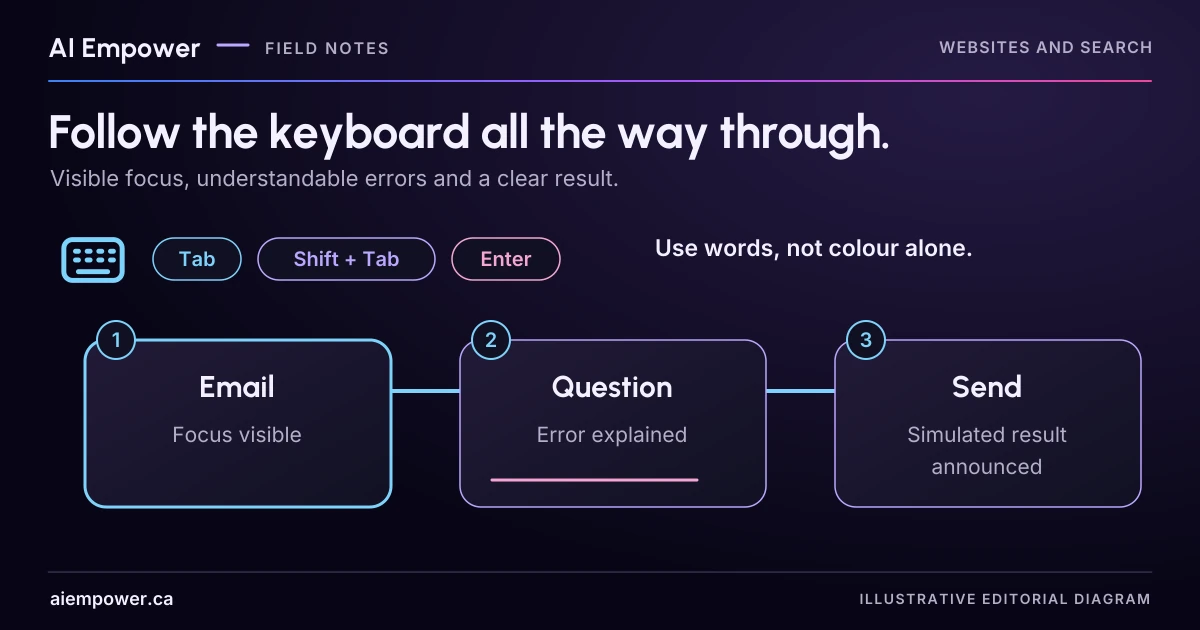
Rehearse a contact-form journey using only a keyboard. Record visible focus, reachable controls and error recovery without claiming an accessibility certification.
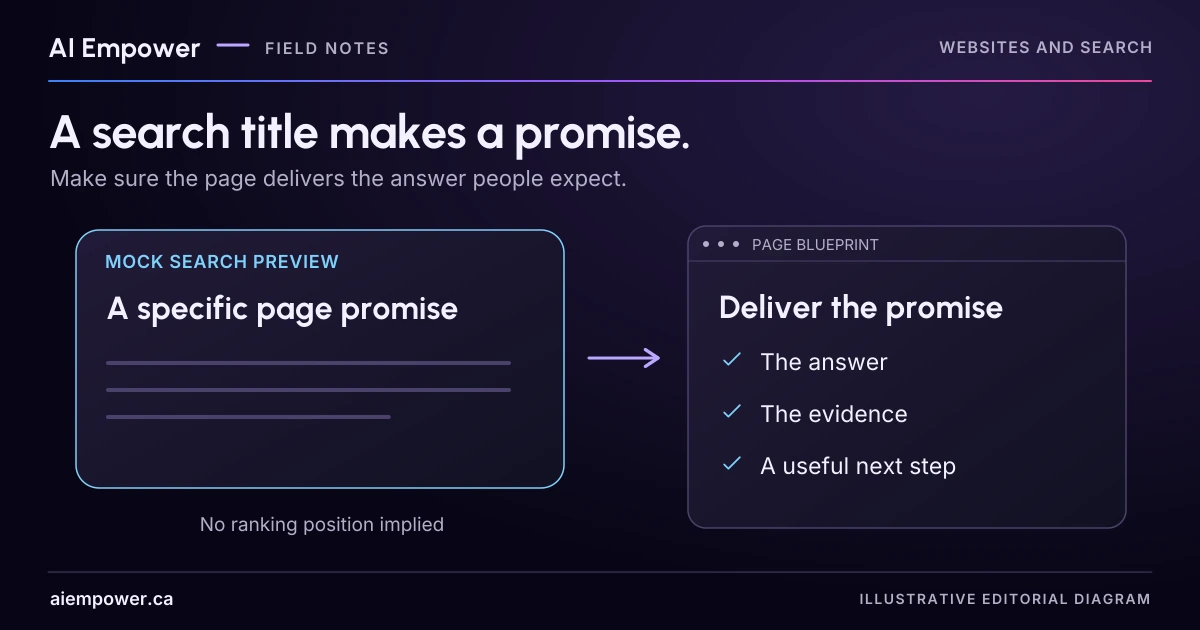
Write an accurate search title and description by matching each promise to the page. Use a fictional preview without assuming Google will display it.
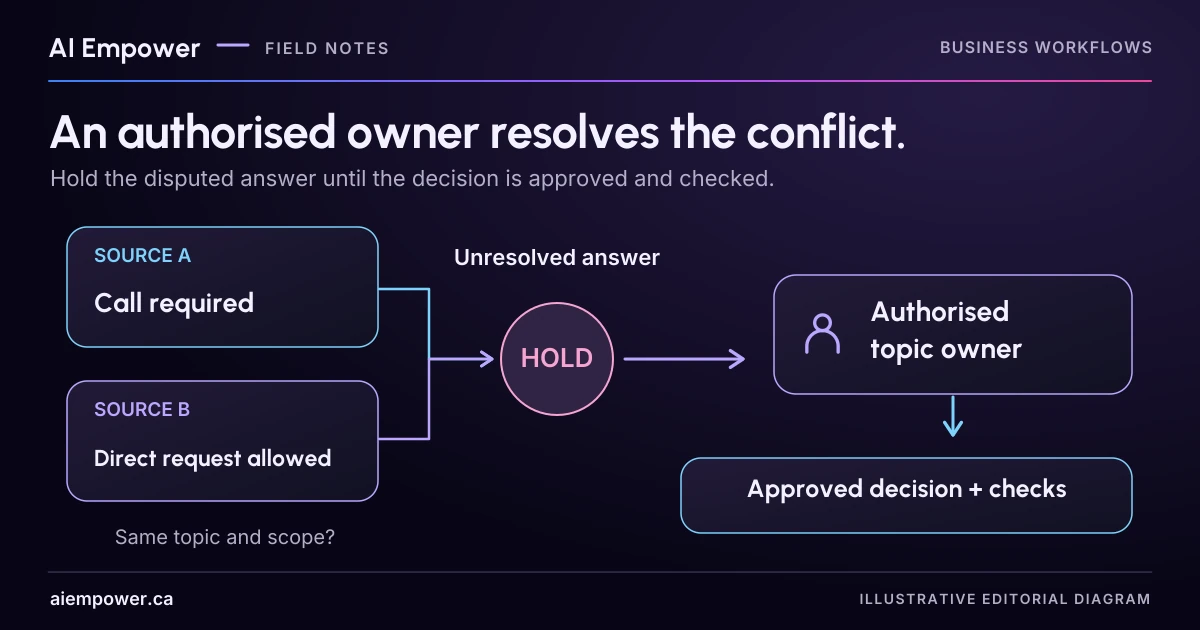
Resolve conflicting AI knowledge-base sources with a claim-level log, an authorised decision, a temporary hold and targeted answer checks.
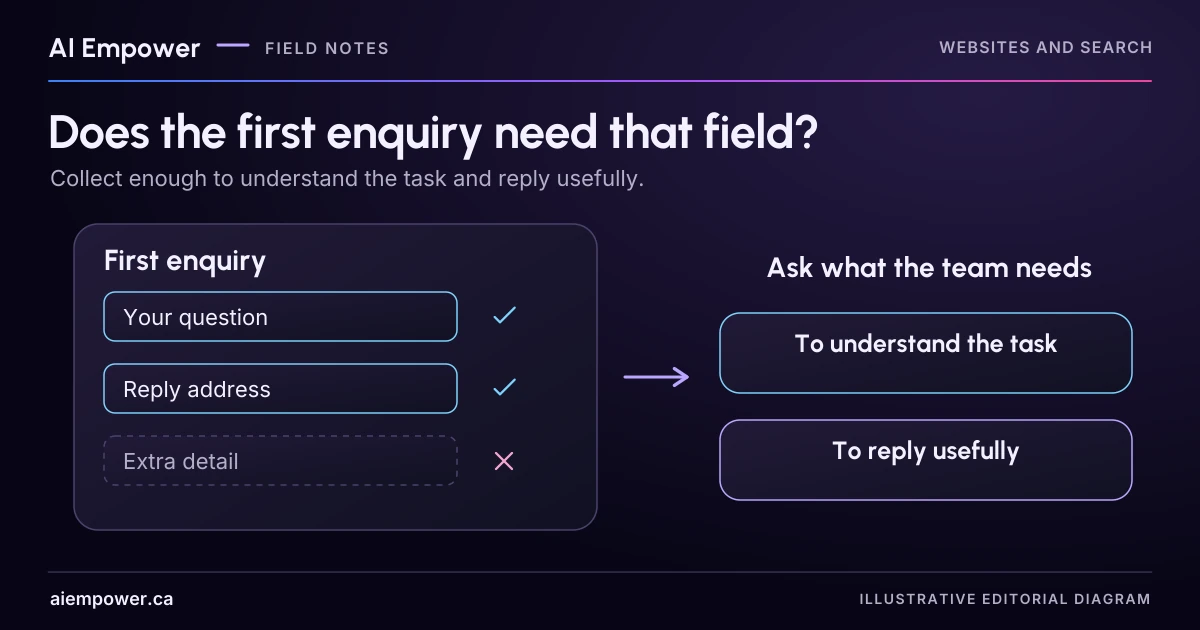
Review every contact-form field against the first reply your team needs to make. Build a leaner fictional enquiry form with labels and useful error messages.
Follow two fictional course enquiries from approved information to a staff-reviewed AI draft, including missing session details and a manual comparison.
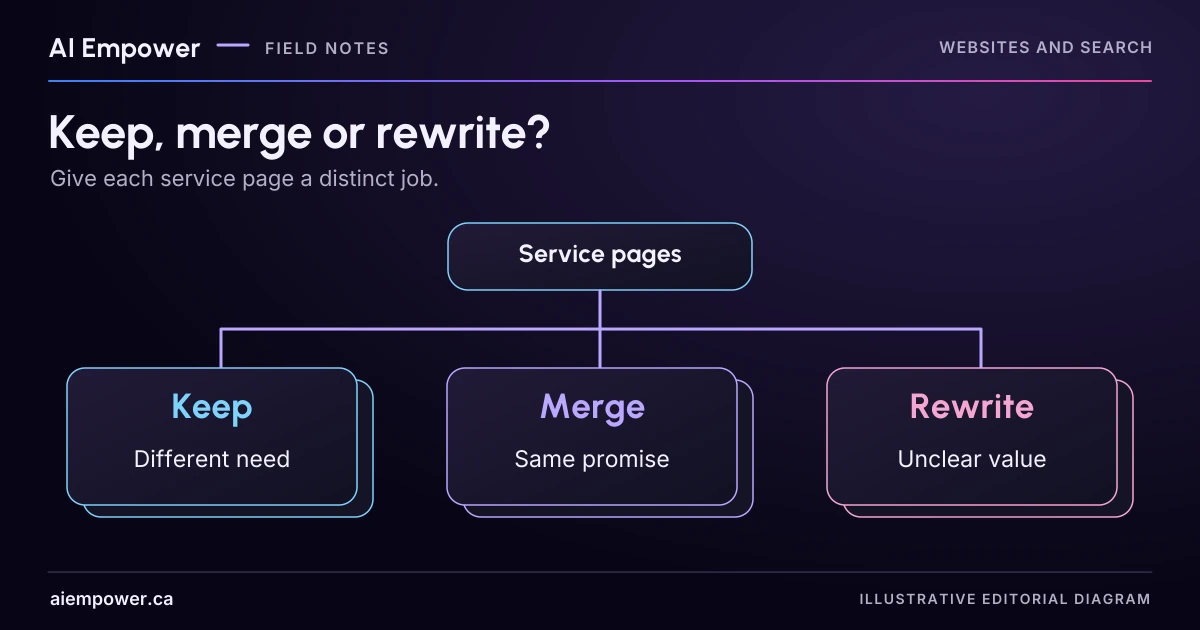
Audit overlapping service pages by reader task, scope and evidence. Build a keep, merge or rewrite plan before changing URLs or redirects.
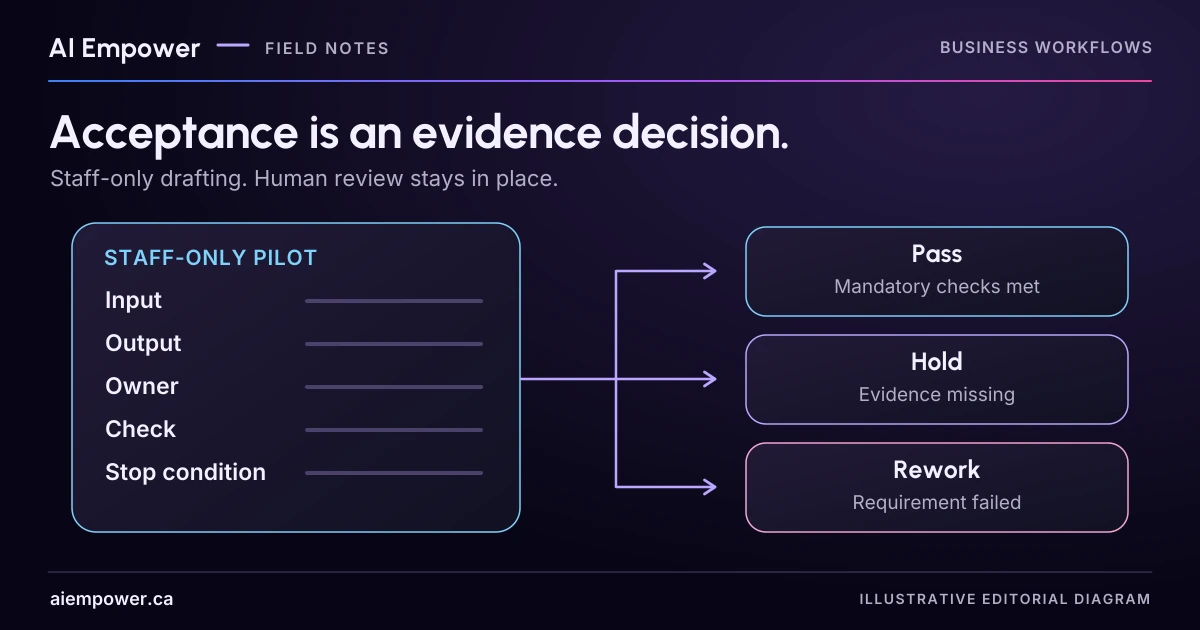
Define pass, hold and rework for a staff-only AI FAQ pilot. Build test cards with expected answers, evidence, owners and clear stop conditions.
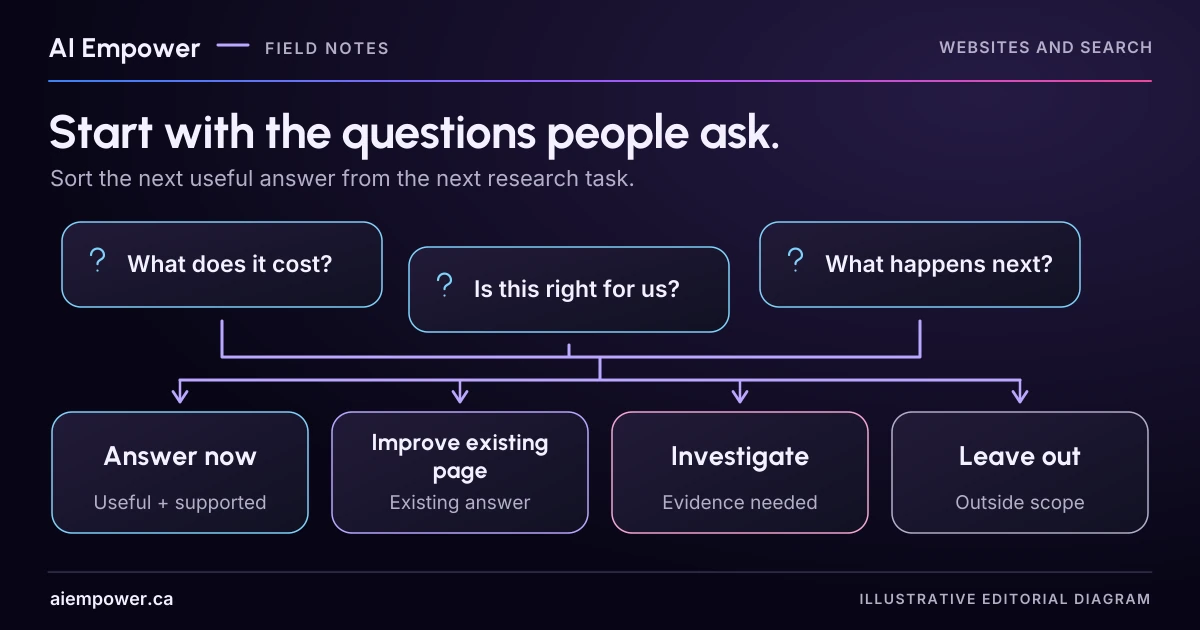
Turn recurring customer questions into a focused blog shortlist. Decide what to answer, improve, investigate or leave out without guessing demand.
Plan five practice sessions across two weeks after an AI workshop. Use a learner log, safe task variations and manager check-ins to guide the next step.
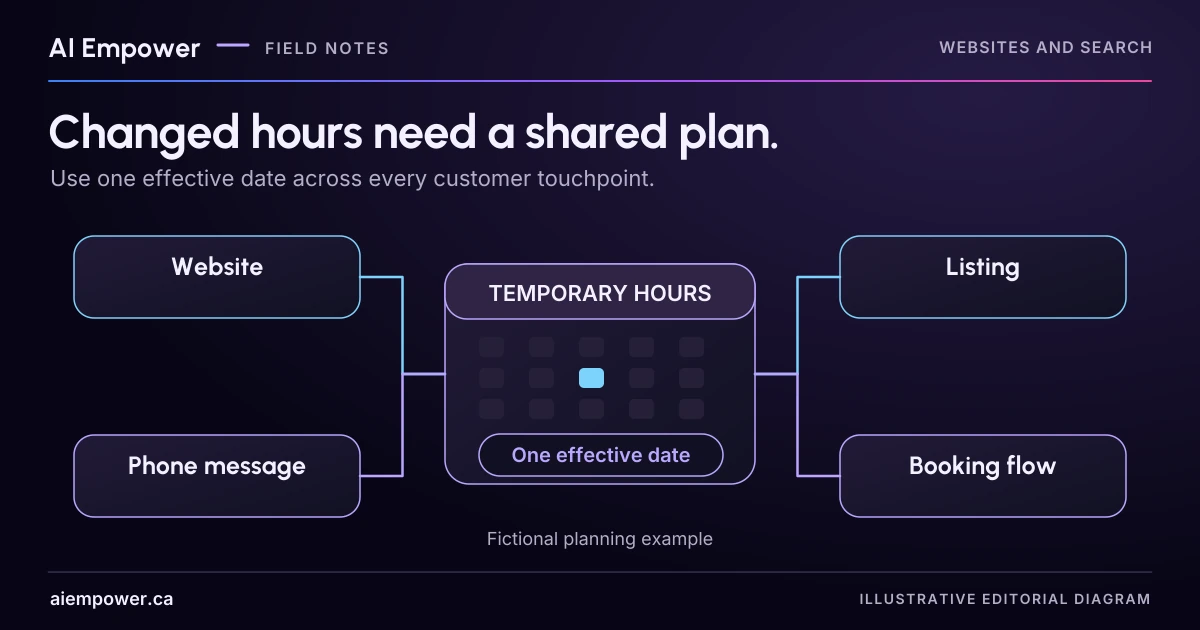
Coordinate temporary business hours across your website, profiles, replies and voice greeting with a dated change, verification and restoration plan.
Rehearse voice assistant handoffs with caller choice, checked summaries and clear fallbacks. Test what happens when a transfer fails or nobody answers.
Ask seven questions about a staff-reviewed AI drafting pilot. Check sources, missing answers, permissions, recovery and what your team can verify.
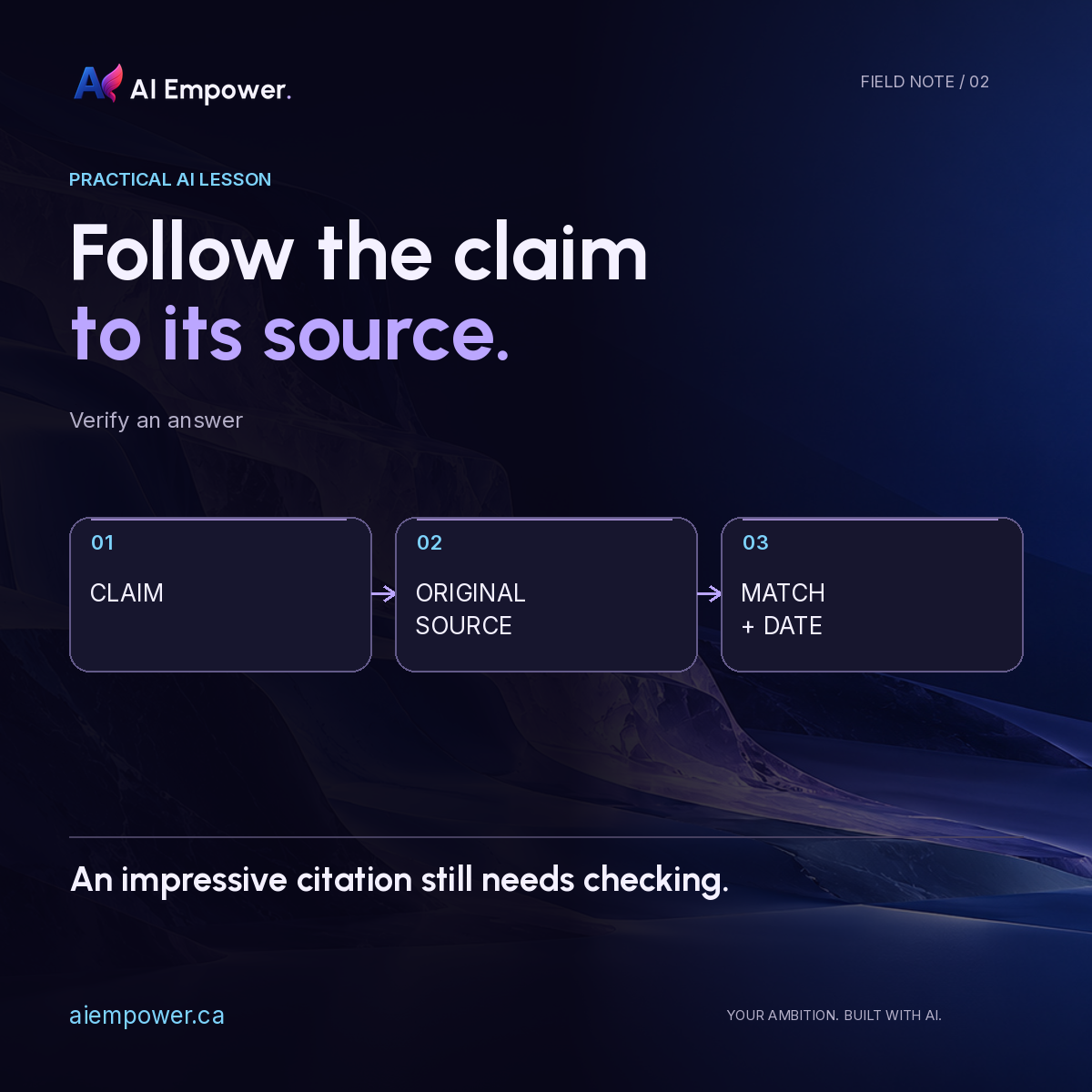
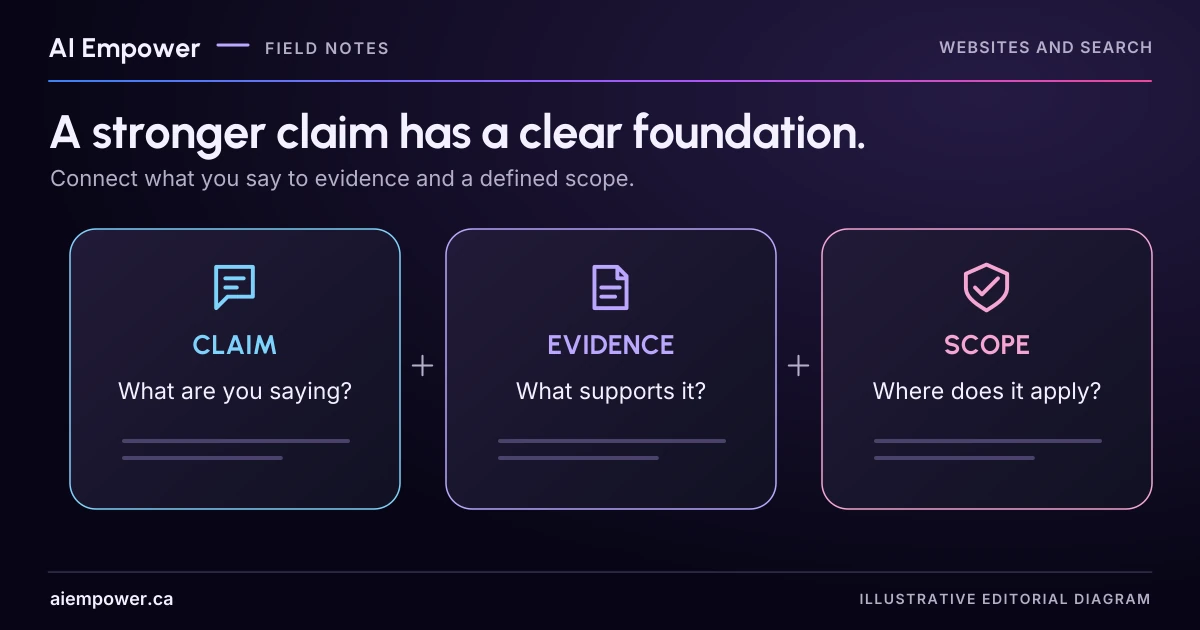
Review AI marketing claims against their evidence. Rewrite fictional time-saving, automation and reliability promises without inventing results.
Map where customer enquiries wait before adding AI. Separate working time from waiting, identify the owner and check whether a small change helps.
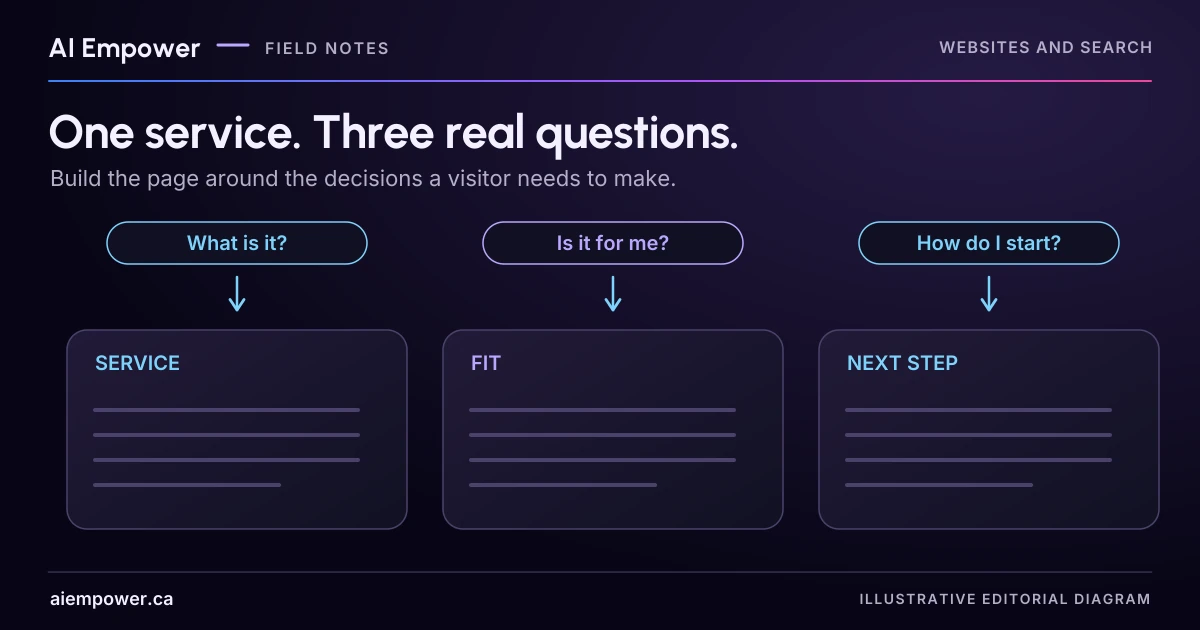
Plan one service page around questions about fit, process and next steps. Map each answer to verified facts, useful evidence and a clear action.
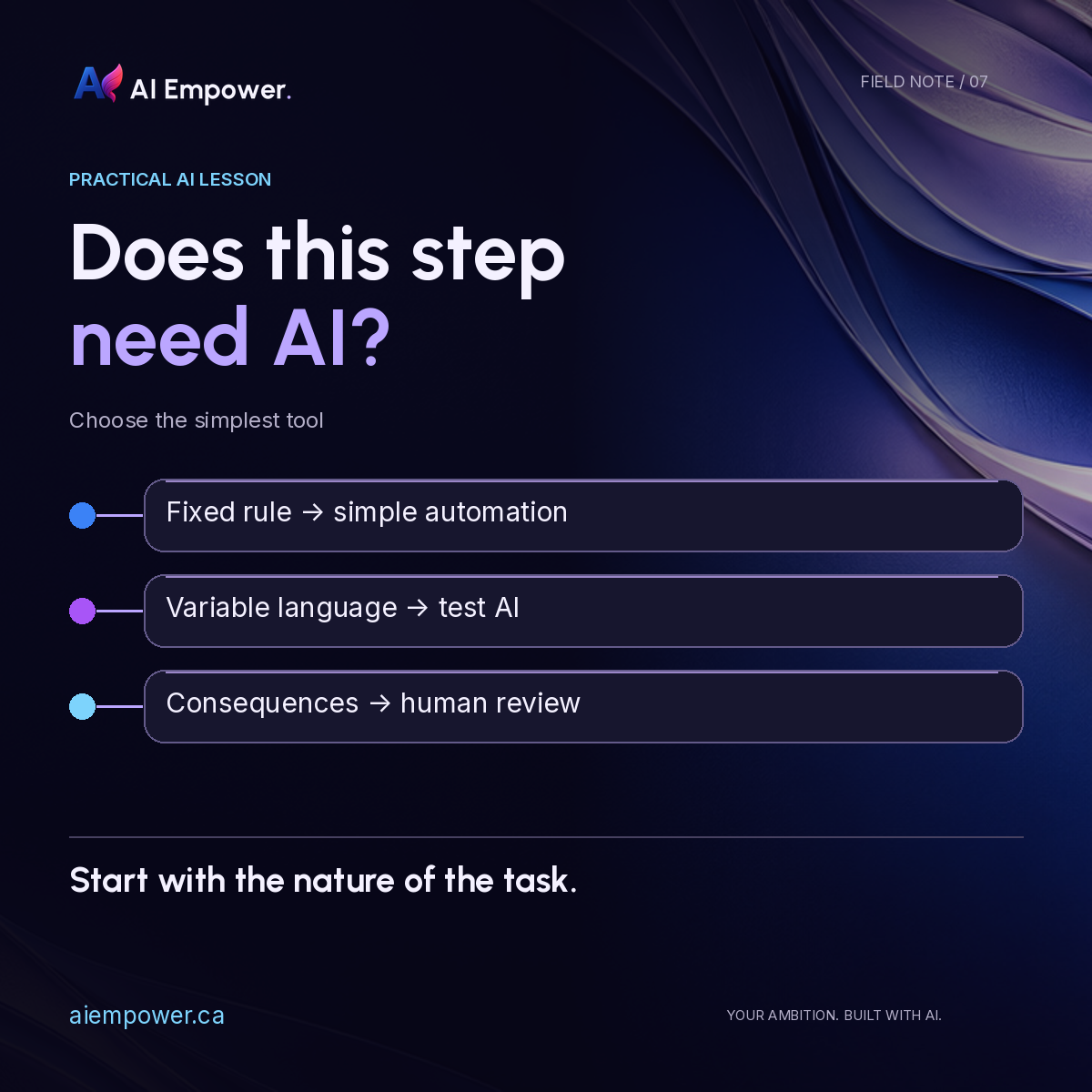
Compare templates, rules and AI drafting on one fictional enquiry. Use the same facts and review worksheet to judge effort, errors and upkeep.
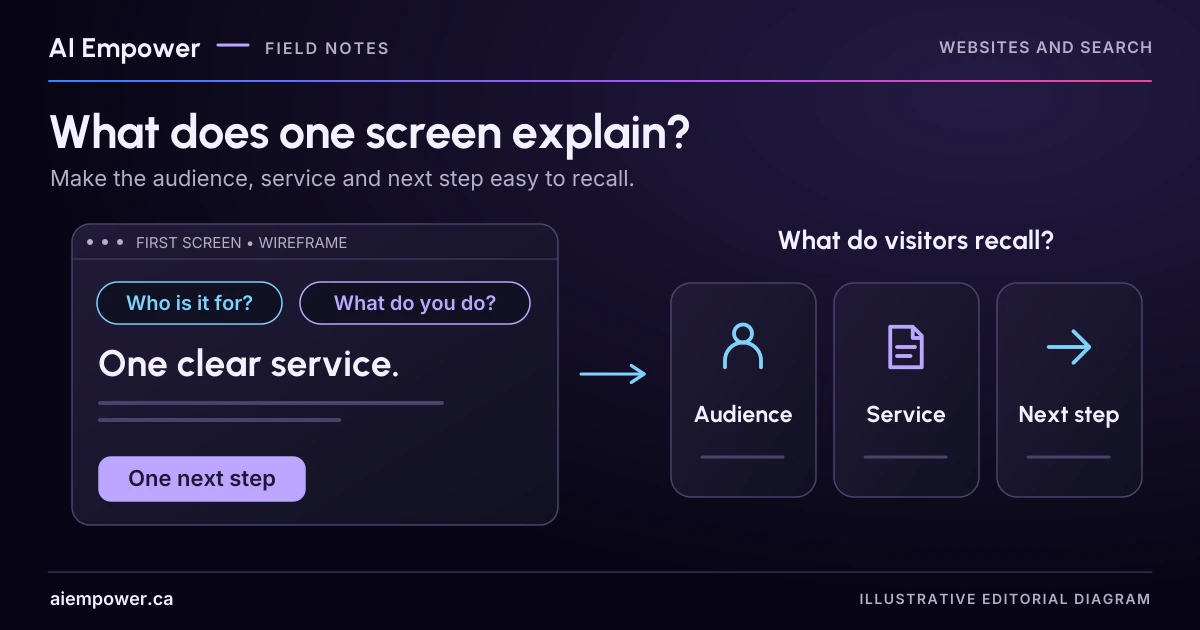
Test whether a homepage explains who you help, what you do and the next step. Use two fictional examples and a simple reader-recall sheet.
Compare a fictional procedure and shorter draft. Restore approval, physical proof and retest branches with a complete eight-case review.
Trace a fictional caller correction from A4 to A5. Preserve unchanged details, recheck dependent answers and test the later turn.
Inspect a complete fictional source and altered extraction for missing pages, mixed steps, reversed table headings and detached conditions before AI summarisation.
Decide what belongs in a public FAQ. Sort questions into stable answers, service-page fixes, current-system checks or staff conversations.
Try an adult AI literacy exercise with two flawed sample answers, an evidence sheet, an instructor key and a rubric for spoken or written responses.
Clean up a fictional service catalogue with stable IDs, meaningful units, distinct variants and honest missing values before an AI lookup trial.
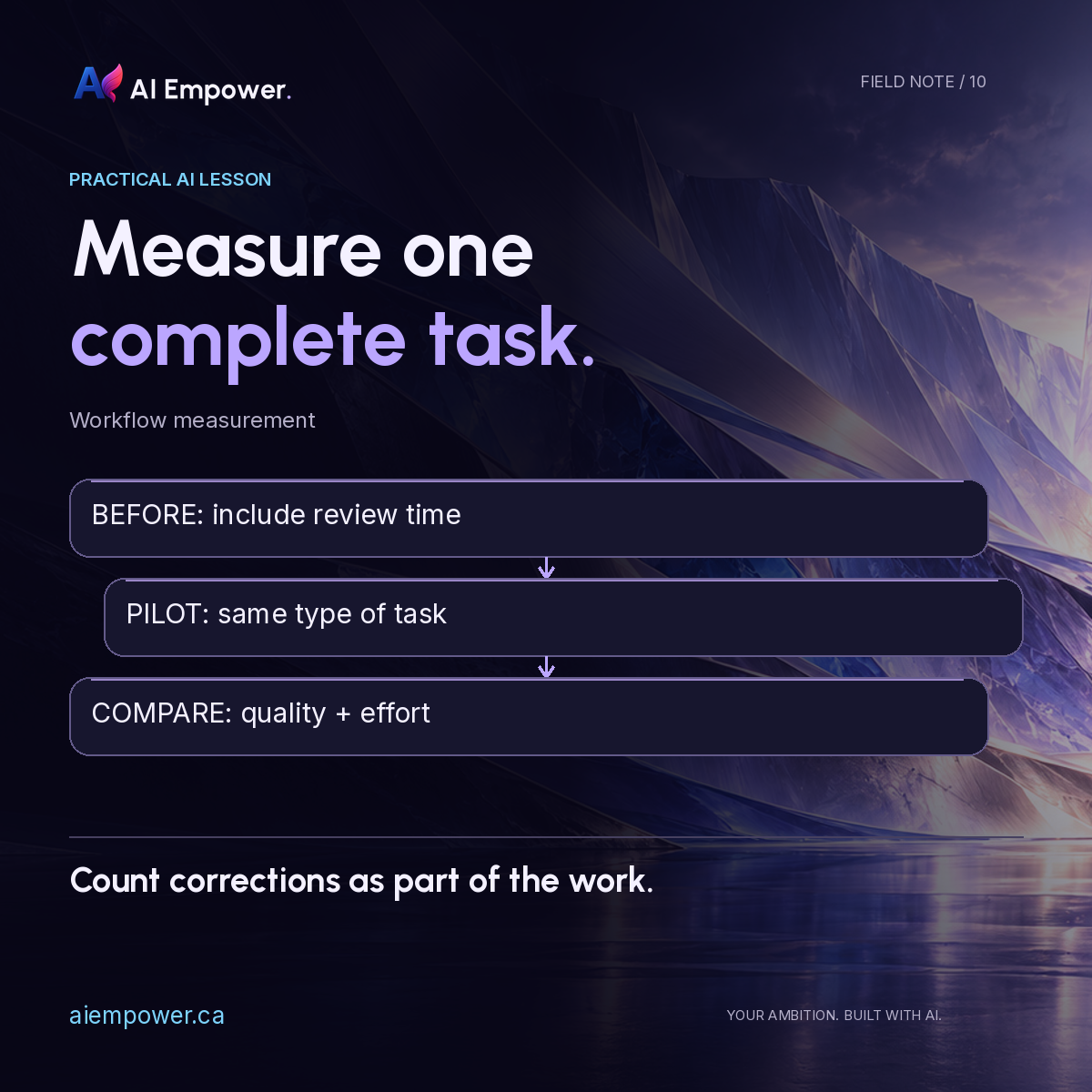
Measure AI time savings with an effort worksheet that includes review, rework and upkeep. Follow a hypothetical example before judging your pilot.
Turn a promising demo into a clear product brief covering users, permissions, integrations, failure states, testing, and maintenance.
Build a practical workshop brief with a real task, safe example data, hands-on exercises, and an honest way to measure learning.
Plan a website around the questions customers need answered, with a practical checklist for mobile pages, forms, performance, and launch.
Compare customer intent, information needs, handoffs, and testing before adding an AI chat or voice assistant to your business.
Design general-information assistants without turning them into unreviewed sources of tax, investment, or personal financial advice.
A careful look at organizing questions and information with AI, while keeping diagnosis and treatment with qualified clinicians.
Build a funding checklist using institutional sources, accurate application details, and current official work rules.
Understand what an AI-generated likeness can and cannot represent before using personal recordings or messages.
Check sources, preserve your real experience, and distinguish an AI suggestion from an official decision.
Use AI as a starting point for questions while respecting sources, varied traditions, and human guidance.
Scope AI support for HR without claiming that automation removes bias or can safely make hiring decisions.
Use AI to organize research and improve real pages while checking sources, crawlability, and content quality.
A practical workflow for clearer résumés and interview practice grounded in your actual background.
Learn to define a task, choose appropriate information, verify the output, and know when to involve a person.
Write reusable task instructions with clear context, boundaries, evidence, and review steps.
AI-assisted writing, with primary-source references and visible review dates. Examples are illustrative unless identified otherwise. Guides do not replace professional advice.
Tell us about the task you want to make easier. We’ll help you explore a practical next step.